Galatians 1:10, Jeremiah 29:7, Matthew 5:13-14, Colossians 2:8, John 17:15-16, Acts 17:22-23, Romans 12:2
To reach people we must appreciate and adapt to their culture, but we must also challenge and confront it. This is based on the biblical teaching that all cultures have God's grace and natural rev...
Romans 12:1-2, Colossians 2:8, 1 John 2:15-17, 1 Corinthians 10:23-33, Mark 7:8-9
When my grandparents were in their eighties, their television developed a fault that made the screen permanently bright green. It was good for viewing garden shows or nature programs, but it was prett...
Isaiah 49:6, Revelation 7:9, John 3:16, Galatians 3:28, Romans 10:12, Acts 1:8, Matthew 28:19-20
The Gospel as such has no native country. He who goes out humbly with Christ in the world of all races will perpetually discover the multiple, but constant, relevance of what he takes. It takes a whol...
Philippians 4:8, Exodus 32:, Ecclesiastes 12:13, Matthew 19:16-30, Proverbs 4:23, Romans 12:2, 1 John 2:15-17
Orwell feared we would become a captive culture. Huxley feared that we would become a trivial culture. . . . Orwell feared that what we hate will ruin us. Huxley feared that what we love will ruin us.
John 6:15, Matthew 5:38-39, Matthew 7:24-27, Matthew 15:1-9, Matthew 16:13-17, John 18:36, Luke 4:18-19, Acts 9:1-9, Psalm 1:
Jesus is understood in the light of the assumptions which control our culture. When “reason” is invoked as a parallel or supplementary authority to “Scripture” and “tradition,” what is happening is t...
Micah 6:6–8, 1 Samuel 8:4–9, Jeremiah 7:1–7, John 8:36, Romans 12:2, Psalm 146:3–5
Nothing illustrates evangelicals’ infatuation with politics more clearly than a story related by a Christian lawyer. Considering whether to take a job in the nation’s capital, he consulted with the le...
John 17:6-19, Matthew 20:20-21, Matthew 6:22-23, Exodus 3:2-5
Jesus Prepares for Departure John 17 is part of a larger section of John’s gospel known as the farewell discourses (13:31-17:26), in which Jesus prepares for his imminent departure from earth after h...
John 17:6-19, Matthew 20:20-21, Matthew 16:22-23, Exodus 3:2-5
Jesus Prepares for Departure John 17 is part of a larger section of John’s gospel known as the farewell discourses (13:31-17:26), in which Jesus prepares for his imminent departure from earth after h...
Luke 15:11-32, Psalm 23:null, John 21:15-19, Luke 19:1-10, Genesis 45:4-7, Psalm 23:5, 2 Corinthians 5:18-19
In the old American South (and in many places in the American North) a European American who invited an African American as a guest to an expensive restaurant in a white section of town would subject ...
John 2:15-16, Romans 12:2, Ephesians 2:1-2, John 15:18-19, James 4:4
The world, though, is protean: each generation has the world to deal with in a new form. World is an atmosphere, a mood. It is nearly as hard for a sinner to recognize the world’s temptations as it is...
John 17:1, Philippians 4:6, James 5:16, 1 Thessalonians 5:17, Matthew 6:6, Acts 6:4, Mark 1:35
It’s no secret that too many evangelical leaders are captivated more by business culture than biblical culture, spending more time absorbed in strategies and effectiveness and relatively little time i...
God’s grace is present in all people and cultures. As we submit ourselves to learning from other cultures, we catch glimpses of God’s grace that would be unavailable in our own culture.
John 14:27, Matthew 2:2, Revelation 19:16, John 18:36-37, Revelation 17:14, Zechariah 9:9, Isaiah 9:6, Psalm 24:7-10, Colossians 1:15-20, Matthew 21:1-11, Mark 11:1-11, Luke 19:28-40, John 12:12-16
In a culture, the most important things usually go without being said. We Westerners don’t talk all the time about being individualists or about the importance of efficiency or why we prefer youth ove...
Colossians 1:16-17, John 1:1-4, Philippians 2:9-11, Matthew 27:54, Acts 9:1-6
Jesus of Nazareth has been the dominant figure in the history of Western culture for almost twenty centuries. If it were possible, with some sort of super magnet, to pull up out of that history every ...
I recently visited a missions school at a large church in Waco, Texas, and decided to try a similar test in a class-sized proportion. “Tell me,” I said to the group, “what is the gospel?” A young lady...
Exodus 3:11-14, Isaiah 6:5-8 , 1 Kings 19:11-13 , John 15:4-5 , Luke 10:38-42 , Psalm 46:10
Historically the West has tended to throw its chief emphasis upon doing and the East upon being. . . . Were human nature perfect there would be no discrepancy between being and doing. The unfallen man...
Mark 9:24, Romans 10:17, John 20:27, 1 John 4:1, 1 Thessalonians 5:21, Proverbs 3:5-6
Have you ever noticed that the phrases in our culture favor doubt over faith? The famed missionary and theologian Lesslie Newbigin pointed this out when we speak of “Honest doubts” and “blind faith”. ...
Colossians 1:15-17, Hebrews 1:3, 2 Corinthians 4:4, John 1:18, John 10:30, John 14:9
Christmas in May I’m pretty sure it was Stephen Covey, back in the day ( The Seven Habits of Highly Effective People ) who originally said, “The main thing is to let the main thing be the main thing...
1 Samuel 16:7, Amos 5:21-24 , Isaiah 1:11-17, John 4:21-24, Matthew 18:20, Psalm 95:6-7
A missionary family who has started organic churches in some of the most dangerous fields in the world once returned to the states for furlough. On the first Sunday back, they visited a large Baptist ...
Mark 10:13-16, Luke 19:1-10, Matthew 9:10-13, John 15:15, Mark 5:35-43
A group of fourth-graders at a Christian school was given an assignment to draw what they would like to do if Jesus spent a day with them. After working diligently on their pictures, one little girl a...
Matthew 11:28-30, Galatians 5:1, Deuteronomy 30:19-20, 1 Corinthians 10:23, John 10:10
When every option is available to us, we don’t actually have freedom; we tend to shut down. I experienced what sociologists call choice overload (or paralysis) and decision fatigue. If you’ve ever tri...
Many have heard of the polymath and famous atheist Bertrand Russell (1872-1970), whose career as a public intellectual touched on a variety of disciplines, including philosophy (he is considered one o...
Mark 10:42-45, Matthew 20:25-28, 1 Corinthians 1:12-13, 1 Timothy 4:12, John 7:16, Galatians 1:10, 2 Timothy 4:3-4, 2 Corinthians 4:5, John 3:30, 1 Corinthians 2:1-2
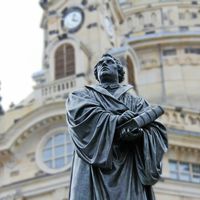
When Martin Luther discovered that some had begun calling the first Protestants “Lutherans,” he strongly objected. It is funny to think that some 500 years later, many are still known by his name: ...
Isaiah 1:11–17, Jeremiah 7:1–11 , Amos 5:21–24, Luke 4:16–30 , John 1:1–14 , Psalm 50:16–23
The Enlightenment was, among many other things, a protest against a system that, since it was itself based on a protest [the Reformation], could not see that it was itself in need of further reform. (...
Genesis 32:22-32, Exodus 33:18-23 , 1 Samuel 1:9-20, Psalm 42:1-2, Mark 10:46-52, John 4:7-26
We are people of desire. We want things. We long for things. It is primal to our nature to yearn. As Saint Augustine reflected, “The whole life of the good Christian is a holy longing. . . . That is o...
John 15:16 , Micah 6:6-8, Amos 5:21-24, Matthew 25:31-46 , James 2:14-17, Psalm 82:3-4
Pastor: Gracious Father, You have chosen us for a purpose – that we might bear lasting fruit for Your Kingdom. You call us to walk humbly before You and to share in the struggle with the least of thes...
In Vanishing Grace , Philip Yancey examines the growing negative perceptions of evangelicals. Although the book was written in 2014, these dynamics have only intensified in the era of MAGA and Ch...