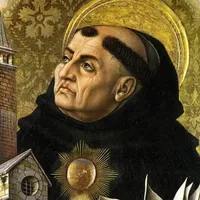
Of the medieval church’s many intellectual leaders, none has had more influence than the philosophical theologian Thomas Aquinas. He was born to a noble family near Naples, Italy, and joined the Domin...
Genesis 4:6-7, 1 Samuel 1:6-8, 18 , Luke 15:28-32, Jonah 4:1-4 , Ephesians 4:31-32, Psalm 55:22
Sometimes we have to “step over” our anger, our jealousy, or our feelings of rejection and move on. The temptation is to get stuck in our negative emotions, poking around in them as if we belong there...
Genesis 3:6–8 , Isaiah 59:2, 2 Samuel 12:7–9 , Romans 3:23, Luke 18:13–14, Psalm 51:4
I just paid a parking ticket the other day. It was easy. I read the charge against me, flipped the ticket over, checked the box that said “I plead guilty to the charge,” filled out a check for $35 to ...
Lamin Sanneh, the African theologian who would be pivotal in the development of missional theology, was raised in an orthodox Muslim household in Gambia. He found himself drawn to Christianity after e...
The great danger is to always single out some aspect of God’s good creation and identify it, rather than the alien intrusion of sin, as the villain. Such an error conceives of the good-evil dichotomy ...
Luke 20:27-38, Mark 12:18-27, Matthew 22:23-33, 1 Corinthians 15:, Genesis 2:18-25
Ancient Lens What can we learn from the historical context? Worldviews Collide In this passage, we have a clash of worldviews similar to some that we find today. While the Sadducees were not mat...
Genesis 4:1-14, Matthew 5:21-22, Exodus 20:13, 1 John 3:15, Deuteronomy 5:17, Romans 12:19, Genesis 9:6
Notes on prayer: This lament can be used as prayers of the people, but can be adapted for other uses as well. It is designed to be responsive, but it would also work if prayed in unison. Leader: ...
We might not say we believe a Jesus-plus-our-efforts idea of the gospel, but when we place our performances on the pedestal of personal progress, we’re not relying on the grace of God. We’re worshipin...
Joseph’s brothers, meaning to harm him, sold him into Egypt, but in reality God sent him there so that he could save Jacob’s family and many others from death by starvation Robert E. Longacre, J...
Psalm 98, for both Israel and the Church, is an intriguing statement about God’s work in Israel and the world, especially in regard to how they are related. Ancient Lens What's the historical c...
Luke 20:27-38, Mark 12:18-27, Matthew 22:23-33, 1 Corinthians 15:, Genesis 2:18-25
Ancient Lens What can we learn from the historical context? Worldviews Collide In this passage, we have a clash of worldviews similar to some that we find today. While the Sadducees were not mat...
Matthew 4:12-23, Romans 5:12-21, Matthew 3:2-3, Isaiah 42:1-4, Hebrews 12:2, Genesis 1:3, Ephesians 2:1-10, Romans 8:3, Psalm 68:18, Ephesians 4:8
Preaching Angle: John Arrested, Jesus Preaches the Kingdom The major event in redemptive history which immediately precedes this passage is Jesus’ temptation in the wilderness. I can’t imagine a 40 d...
Matthew 4:12-23, Romans 5:12-21, Matthew 3:2-3, Isaiah 42:1-4, Hebrews 12:2, Genesis 1:3, Ephesians 2:1-10, Romans 8:3, Psalm 68:18, Ephesians 4:8
Preaching Commentary Preaching Angle: John Arrested, Jesus Preaches the Kingdom The major event in redemptive history which immediately precedes this passage is Jesus’ temptation in the wilderness....
Ancient Lens What's the historical context? Dissolving the Divisions Generally speaking, the Psalms divide the people of the earth into two groups: “Israel” and “the nations.” Psalm 98 surpr...
Genesis 4:6-7 , 2 Samuel 17:23 , Jonah 4:1-3 , Matthew 18:21-22, 32-35, Ephesians 4:31-32 , Psalm 37:8
Resentment is like a poison we carry around inside us with the hope that when we get the chance we can deposit it where it will harm another who has injured us. The fact is that we carry this poison a...
Nick believed his purpose was to speak to audiences, to become a motivational speaker, yet he had no experience, no resources, and no invitations. He decided to begin calling schools and offering to s...
Reject Christianity, if you will, out of motives of cynicism; turn away from it because you believe. Reality is malign and punitive; choose a God that is cantankerous, vindictive, or forgetful, or det...
Shame makes its way into our stories at an early age. So early, in fact, that we usually have no conscious memory of our initial encounters with it. This can take place as early as fifteen to eighteen...
God uses our identity crises to reveal who we are and who he is. Sometimes these crises come out of nowhere. Something devastating happens. Someone close to us dies. We are diagnosed, or someone we kn...
The word “acceptance” has an interesting origin. It comes from the Latin ad capere, which means to “take to oneself.” What does that mean? It’s a paradoxical truth, but in order for us to accept other...
Carl Jung, one of the early pioneers of modern psychology, wrote this from his years of experience as a therapist: The acceptance of oneself is the essence of the moral problem and the epitome of ...
Genesis 12:1-3, Exodus 3:10-12, Isaiah 55:1-3 , Luke 14:16-24, Matthew 11:28-30 , Psalm 23:5
Invitations are powerful. Like tides, they ebb and flow, shaping the contours of our existence. Some invitations we desperately want but never get—“Will you marry me?” or “Would you consider a promoti...
Genesis 3:7-8, Proverbs 28:13, 1 John 1:7-9, James 5:16, Galatians 6:1-2
Shame has two conflicting instincts. It needs to isolate and hide, and it needs a community in which to be transparent. Hiding, of course, usually wins. It is the easier and more natural of the two. B...
Genesis 16:, 2 Samuel 9:, Jonah 3:4 , Luke 7:36-50, Matthew 9:9-13 , Psalm 146:7-9
In his book Breaking the Rules , Fil Anderson talks about the scandalous reputation of Jesus: He breaks all social etiquette in relating to people. He acknowledges no barriers or human divisions....
While I was born much too late to be the legal property of a person in America, I have been the recipient of racism. When a classmate called me a racial epithet in my first year of college, I was deva...
Uncontrolled temper is soon dissipated on others. Resentment, bitterness, and self-pity build up inside our hearts and eat away at our spiritual lives like a slowly spreading cancer.