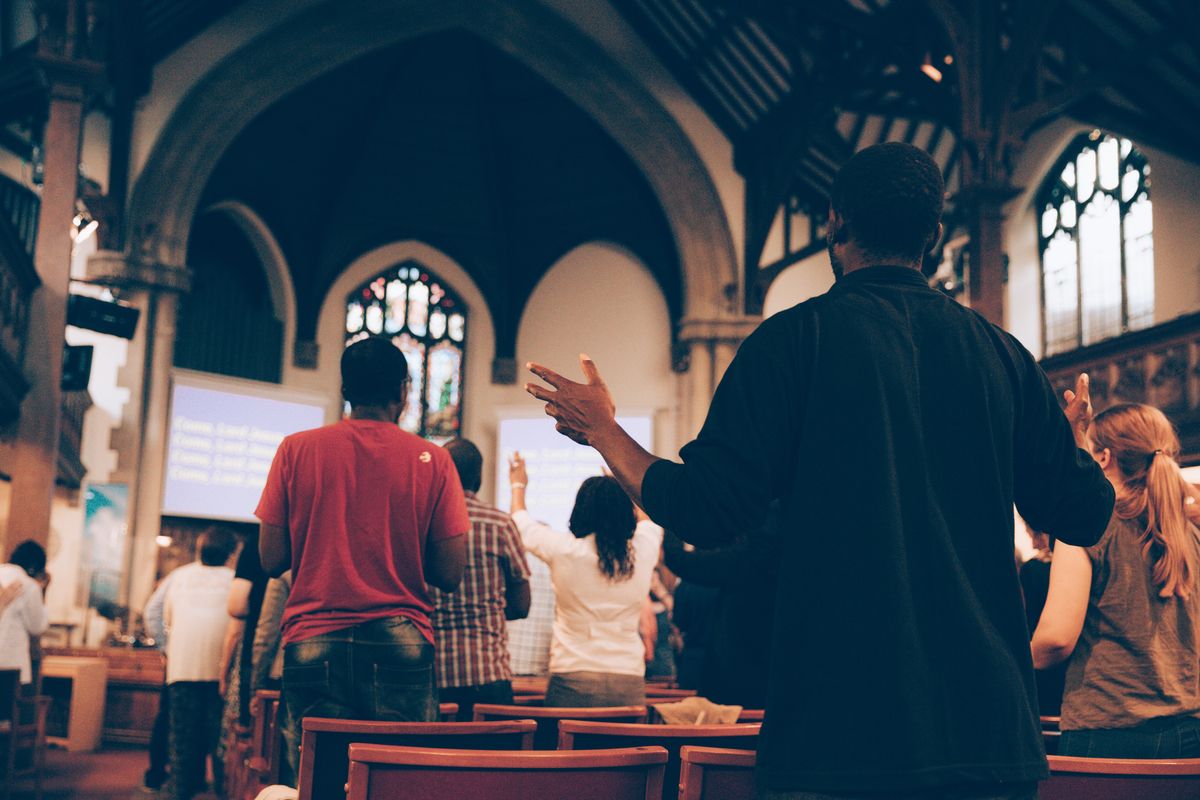
When Queen Victoria first took the throne, she attended a performance of Handel's Messiah, a customary event for royalty. Advised on proper etiquette, she was informed that she should not stand du...
Leader: “With what shall I come before the Lord, and bow myself before God on high?" People: "Will the Lord be pleased with thousands of rams, with ten thousands of rivers of oil?" Le...
Ancient Lens What's the historical context? Context in Mark Recall the context. In chapter 11, Jesus entered Jerusalem to much acclaim and briefly entered the temple (vv. 1-11). The next day,...
John 12:1-8, Mark 14:1-2, Matthew 26:3-13, John 11:45, Luke 7:44-47, Matthew 26:6, Mark 14:3, Luke 7:40, John 11:50-53, Luke 24:41-43, John 21:10-14, Acts 10:40-41, John 12:7, Philippians 2:6-8, Romans 6:1-10
Preaching commentary Introduction This narrative is slightly changed from the Synoptic accounts. Matthew and Mark’s Gospels place this narrative two days prior to the Passover (Matt: 26:6-13; Mark ...
John 12:1-8, Mark 14:1-2, Matthew 26:3-13, John 11:45, Luke 7:44-47, Matthew 26:6, Mark 14:3, Luke 7:40, John 11:50-53, Luke 24:41-43, John 21:10-14, Acts 10:40-41, John 12:7, Philippians 2:6-8, Romans 6:1-10
Introduction This narrative is slightly changed from the Synoptic accounts. Matthew and Mark’s Gospels place this narrative two days prior to the Passover (Matt: 26:6-13; Mark 14:1). Three Evangelist...
Matthew 6:1-6, Deuteronomy 6:4-9, Matthew 23:4, 5, 13-36, Mark 12:42, Luke 21:2, Isaiah 58:6, Joel 2:1-2, 12-17
Ancient Lens What can we learn from the historical context? "Hear O Israel..." The Shema (Deuteronomy 6:4-9) commands the Israelites to love the Lord their God with heart, soul, and m...
Isaiah 29:13, Isaiah 29:13, Matthew 15:7-9, 1 Samuel 16:7, Micah 6:6-8, Amos 5:21-24 , Luke 18:9-14
These people come near to me with their mouth and honor me with their lips, but their hearts are far from me. Their worship of me is based on merely human rules they have been taught.
Prayer that is used for any other purpose, no matter how lofty, than to personally converse with a personal God is a sham. It must never be used as part of public relations. It must never be put to th...
Mark 14:1-72, Mark 15:1-47, Luke 7:36-50, Luke 8:1-3, John 12:1-8
Anointed One, Heal our stingy, selfish ways Silence our accusations End the worship wars The congregation is invited to offer their own prayers of confession silently We remember our faithful sist...
Matthew 6:1-6, 16-21, Deuteronomy 6:4-9, Matthew 23:4, 5, 13-36, Mark 12:42, Luke 21:2, Isaiah 58:6, Joel 2:1-2, 12-17
AIM Commentary Ancient Lens What can we learn from the historical context? "Hear O Israel..." The Shema (Deuteronomy 6:4-9) commands the Israelites to love the Lord their God with h...
May the stubble and the grass praise you, Aaron and Moses praised you, May male and female praise you, May the seven days and the stars praise you, May the lower and upper air praise you, ...
Confusion about Epiphany The celebration of the Epiphany of our Lord can be at once both wholly familiar or somewhat confusing, especially for those who grew up in less liturgical traditions. What ca...
My friend Isaac Wardell, a pastor of worship and founder of Bifrost Arts, asks whether we think of gathered worship as being more like a concert hall or a banquet hall. If it’s a concert hall, we show...
Genesis 1:26-27, Genesis 1:27, Song of Solomon 4:7-10, Proverbs 5:18-19 , 1 Corinthians 6:19-20 , Ephesians 5:31-32, Psalm 139:13-14
The spiritual discipline of honoring the body helps us find our way between the excesses of a culture that glorifies and objectifies the body and the excesses of Christian tradition that have often de...
Worship means, literally, acknowledging the worth of something or someone. It means recognizing and saying that someone or something is worthy of praise. It means celebrating the worth of someone or s...
Confrontation Most pastors don’t care for confrontation. Maybe, that could be said for most people. There are the rare few of us who thrive on the tension and drama that comes with a direct standoff,...
As in ancient Israel, thanksgiving had a liturgical form in the communities of early Christians. In talking about tongues, Paul says that one who does not know the tongue cannot join in the “Amen” at ...
Exodus 16:4, 1 Samuel 1:27–28, Isaiah 55:1–2, Luke 17:15–16, Romans 5:8, Psalm 100:4
The words “gratitude” and “grace” come from the same root word, gratia in Latin and kharis in Greek, as mentioned earlier. In addition to being the name of a goddess, “grace” is a theological word, on...
Preaching Commentary Confrontation Most pastors don’t care for confrontation. Maybe, that could be said for most people. There are the rare few of us who thrive on the tension and drama that comes ...
O come, let us worship and bow down: let us kneel before the Lord our maker. For he is our God; and we are the people of his pasture, and the sheep of his hand
Psalm 42:5, Romans 12:15, Ephesians 4:26, Lamentations 3:19-23, James 4:8-9
Too often we are given a choice—emotions or faith and belief. Yet as Dan Allender and Tremper Longman observe, Emotion links our internal and external worlds. To be aware of what we feel can open ...
Preaching Commentary Confusion about Epiphany The celebration of the Epiphany of our Lord can be at once both wholly familiar or somewhat confusing, especially for those who grew up in less liturgi...
Look, the insidious thing about these forms of worship is not that they're evil or sinful; it is that they are unconscious. They are default-settings. They're the kind of worship you just grad...
The foundations of my Christian faith were laid in mid-20th century fundamentalist churches. For introducing me to Jesus, I am grateful. However, over the years I have had to cast aside and recover fr...
A benediction. When all is said and done, these are the final thoughts we are left with. These are God’s words to God’s people. These are the good words of blessing God would like you to have stuck in...
The crux and crisis is that man found it natural to worship; even natural to worship unnatural things. . . . If man cannot pray, he is gagged; if he cannot kneel, he is in irons.