It was strictly forbidden to preach to other prisoners. It was understood that whoever was caught doing this received a severe beating. A number of us decided to pay the price for the privilege of pre...
Romans 1:16, John 15:19-20, Matthew 5:10-12, Mark 10:29-30, Revelation 2:10-11, Matthew 10:16-18, 1 Peter 4:12-14, Romans 8:35, 2 Corinthians 12:10
An American pastor once asked an Indonesian missionary who works among Indonesians but with a different people group from his own, “Are you afraid you’ll get caught?” Christian mission work in Indones...
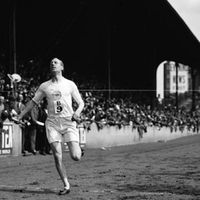
Eric Liddell, the “Flying Scotsman” was made famous by the 1981 movie Chariots of Fire . He was born to missionary parents in China in 1902 and educated in the United Kingdom. Though he made the Bri...
Background of Writing Luke/Acts I don’t know about you, but as a kid, and even a teenager, I never really thought too much about how the Biblical canon was formed. If I had to guess, I’d probably hav...
Preaching Commentary Background of Writing Luke/Acts I don’t know about you, but as a kid, and even a teenager, I never really thought too much about how the Biblical canon was formed. If I had to ...
Context If you're jumping into Luke partway through the story, it helps to do one of those "Previously On..." clips you see at the beginning of an episode in a TV series. The most impo...
Matthew 10:40-42, John 20:21, Acts 1:18, 2 Peter 2:13, Luke 17:10, John 3:18, Matthew 28:19, Ephesians 5:20, James 5:14, Colossians 3:17, Acts 3:6, 1 Corinthians 6:11, Acts 20:35
The Transitive Property of Welcoming In elementary school math you learn various basic principles of working with numbers…the commutative property, the associative property, the distributive property...
Matthew 10:40-42, John 20:21, Acts 1:18, 2 Peter 2:13, Luke 17:10, John 3:18, Matthew 28:19, Ephesians 5:20, James 5:14, Colossians 3:17, Acts 3:6, 1 Corinthians 6:11, Acts 20:35
preaching commentary The Transitive Property of Welcoming In elementary school math you learn various basic principles of working with numbers…the commutative property, the associative property, th...
Context We haven’t been following the story of Luke yet. We’re now jumping into Luke partway through, so it helps to do one of those review clips you see at the beginning of an episode in a TV series...
While in seminary I did some research and editing work for a missiology professor, and I came across a story of a missionary who took Jesus’s illustration of sheep and goats quite literally when worki...
This scripture guide is adapted from the Summer Settings sermon guide Road Trips II . For more Summer Settings sermon guides, click below. Saul's Confident Error Last week, we considered A...
Preaching Commentary Context Assyria the Destroyer of the Northern Kingdom It is important to remember that in addition to there being seventeen books of prophecy in the Old Testament, each one of...
Context Prophecy: Not Just Future-Telling When confronted with the question of the purpose of the prophetic books in the Old Testament, it is commonly supposed that their primary purpose is future t...
Context Prophecy: Not Just Future-Telling When confronted with the question of the purpose of the prophetic books in the Old Testament, it is commonly supposed that their primary purpose is future t...
Preaching Commentary An Introduction from Luke Our passage begins with a note from the author (Luke) to his reader (Theophilus), which reminds us that Luke-Acts was initially meant to be two parts ...
For purposes of practicality and relatability, this series considers the Mediterranean Sea and the Red Sea “oceans.” The point is to relate our present-day affinity for the ocean, seashore, and beach...
John 17:18, John 20:21, Acts 1:1-11, Acts 8:26-39, Acts 9:36-42, Acts 10:34-35, Acts 17:16-34, Acts 20:31-35
[Jesus] sends us into the world as he was sent into the world (John 17:18; 20:21). We have to penetrate other people’s worlds, as he penetrated ours: the world of their thinking (as we struggle to und...
Matthew 9:35-10, Deuteronomy 6:6-8, 1 Corinthians 3:7, Acts 1:null
Here Comes the Crowd Though he was challenging and divisive, Jesus always could draw a crowd. Some came because he had miraculously healed the lame or fed thousands. Others were there for the scandal...
Proverbs 3:5-8, Matthew 22:37, Romans 12:1-2, Luke 14:26-27, Deuteronomy 6:5, Luke 16:13, Mark 12:30, John 14:15, Matthew 16:24-26, Luke 9:59-62, Matthew 6:24, Hebrews 11:13-16, Hebrews 10:38-39, Matthew 6:33-34, Matthew 10:37-39
What are you willing to do for love? An instructor for the Perspectives on the World Christian Movement course shared with a class the major hang-up he had to get over before asking his wife to ma...
For purposes of practicality and relatability, this series considers the Mediterranean Sea and the Red Sea “oceans.” The point is to relate our present-day affinity for the ocean, seashore, and beach...
Context This week’s reading from Acts recounts the call to Paul on his second missionary journey to go to Macedonia and his encounter with Lydia in Philippi. Textual Context The structure of the B...
Saul's Confident Error Last week, we considered Abram and the way that God may send us out on a journey, waiting to see his will without knowing the destination. Today we move forward to Saul on...
Context This week’s reading from Acts recounts the call to Paul on his second missionary journey to go to Macedonia and his encounter with Lydia in Philippi. Textual Context The structure of the B...
Leader: May God be gracious to us and bless us and make his face to shine upon us, that your way may be known on earth, your saving power among all nations. People: Let the peoples praise you, O Go...
Father–nothing escapes your notice, is beyond your care or too hard for you to take on, whether it concerns nations or individuals. You have a heart for all the world–not just our little piece of it. ...
Context Standard Letter Format In all of Paul’s letter there is a basic format, which is based on the Greco-Roman form that was common at the time. Paul’s letters almost always include: Salutat...
Context Standard Letter Format In all of Paul’s letter there is a basic format, which is based on the Greco-Roman form that was common at the time. Paul’s letters almost always include: Salutat...