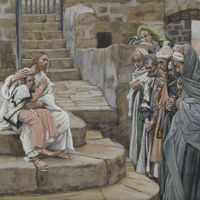
Ezra 4:7–24, Daniel 2:4–49, Nehemiah 8:1–8, Mark 5:41 , John 19:19–22, Acts 2:1–13
One development of the exile was an additional language for the Jewish people. The Babylonians and Persians spoke Aramaic, and out of necessity the Jews learned it. Some even became more conversant in...
Genesis 12:1–3, Exodus 3:1–12, Isaiah 53:, Matthew 22:15–22 , John 4:1–42 , Acts 17:16–34
The world of Jesus was not the Old Testament Hebrew world. Like the United States now, Israel was multicultural, including a combination of Aramaic, Greek, and Roman influences. The people looked Jewi...
Deuteronomy 25:4, 1 Samuel 15:2-3, Ezekiel 37:1-14, Matthew 5:38-48, John 6:66-69 , Psalm 103:8-12
The experience of Barry Taylor, former rock musician and now pastor, suggests a reason. He told me, “In the early 1970s my best friend became a Jesus freak. I thought he was crazy, so I started search...
1 Kings 17:8-16, Daniel 6:16-23, Matthew 14:25-31, Luke 4:33-36, John 2:1-11 , Psalm 77:14-15
It is impossible to use electric light and the wireless and to avail ourselves of modern medical and surgical discoveries, and at the same time believe in the New Testament world of spirits and miracl...
The New Testament scholar Craig Evans makes a compelling observation about how the academy can sometimes hinder the church through overly skeptical scholarship: Some scholars seem to think that th...
Romans 12:1, Matthew 22:37-38, James 2:14-17, John 14:15, Luke 9:23, Philippians 2:5-8, Romans 10:9-10, Psalm 1:1-6
New Testament theology is ‘inherently self-involving as it summons the reader to believe, confess, obey, and understand the entirety of one’s existence—both her or his thinking and willing—in light of...
Colossians 1:28, Romans 12:2, Acts 11:26, Luke 9:23, John 17:3, Matthew 28:19-20
Jesus didn’t tell his friends, “Go into all the world and make Christians.” But he did tell them to go into the world and make disciples. In fact, the Bible uses the word disciple 269 times. As Dallas...