Reflection In Isak Dinesen’s 1958 short story, “Babette’s Feast,” we see Babette Hersant, a 19th century French chef from Paris, seek political asylum in the Jutland region of Denmark in the home of ...
Ancient Lens What can we learn from the historical context? Back to Bethany The trans-Jordan village of Bethany was the place in which Jesus’ ministry began. It is now the place in which our text...
Zechariah 9:9, John 12:12-19, Matthew 21:1-11, Luke 19:28-44
This liturgical reading could begin or close your Palm Sunday processions. While written for one reader, there is the option of adding congregational responses, such as giving the shouts of Hosann...
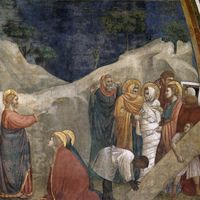
When Lazarus left his charnel-cave, And home to Mary’s house return’d, Was this demanded—if he yearn’d To hear her weeping by his grave? ‘Where wert thou, brother, those four days?’ There lives no ...
John 12:1-8, Mark 14:1-2, Matthew 26:3-13, John 11:45, Luke 7:44-47, Matthew 26:6, Mark 14:3, Luke 7:40, John 11:50-53, Luke 24:41-43, John 21:10-14, Acts 10:40-41, John 12:7, Philippians 2:6-8, Romans 6:1-10
Preaching commentary Introduction This narrative is slightly changed from the Synoptic accounts. Matthew and Mark’s Gospels place this narrative two days prior to the Passover (Matt: 26:6-13; Mark ...
Ancient Lens What can we learn from the historical context? Back to Bethany The trans-Jordan village of Bethany was the place in which Jesus’ ministry began. It is now the place in which our text...
John 12:1-8, Mark 14:1-2, Matthew 26:3-13, John 11:45, Luke 7:44-47, Matthew 26:6, Mark 14:3, Luke 7:40, John 11:50-53, Luke 24:41-43, John 21:10-14, Acts 10:40-41, John 12:7, Philippians 2:6-8, Romans 6:1-10
Introduction This narrative is slightly changed from the Synoptic accounts. Matthew and Mark’s Gospels place this narrative two days prior to the Passover (Matt: 26:6-13; Mark 14:1). Three Evangelist...
Isaiah 7:14, Matthew 1:21, John 2:5, Luke 1:45, Luke 1:39-40, Luke 1:34, Luke 1:38
Mary was a nobody who became greater than everybody, simply because God came to her and she responded in the humblest possible way. She reasoned, she doubted, she surrendered, she connected with other...
Luke 2:22-24, 2 Corinthians 8:9, Isaiah 9:6-7, Philippians 2:6-8, John 1:14, Isaiah 61:1
They were poor. We know this because the two young turtledoves Joseph and Mary brought was the smallest offering they were allowed as devout Jews and yet the largest they likely could afford. With tw...
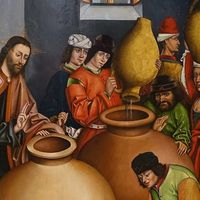
Jesus’ first sign Uniquely, John refers to Jesus’ miracles as “signs,” and changing the water into wine is recorded as being Jesus’ first sign. The use of the term “sign” is significant in that Joh...
Jesus’ first sign Uniquely, John refers to Jesus’ miracles as “signs,” and changing the water into wine is recorded as being Jesus’ first sign. The use of the term “sign” is significant in that Joh...
Hear the words of our Lord Jesus Christ on the night before his death: “Do you understand what I have done to you? You call me Teacher and Lord, and you are right, for so I am. If I then, your Lord a...
This guide has been updated and expanded. Our Maundy Thursday guide for 2026 on John 13 incorporates this material along with additional commentary, illustrations, and discussion questions. Check ...
Leader: Jesus rose from supper. He laid aside his outer garments, and taking a towel, tied it around his waist. Then he poured water into a basin and began to wash the disciples' feet and to wipe ...
At this point in the Gospel we move out of the streets into the quiet of a room. “The noise of the cosmos has died away: the stillness of night prevails” (Bultmann). And yet, in [that] quiet room, Jes...
The transformation from water to wine is of course meant by John to signify the effect that Jesus can have, can still have today, on people’s lives. He came, as he says later, that we might have life...
Leader: Martha said to Jesus, "Lord, if you would have been here, my brother would not have died. Even now I know that whatever you ask of God, God will give you." People: Jesus said to he...
Mark 6:14-29, Mark 6:6b-13, Mark 6:30, John 1:14, Mark 6:30, Mark 8:29, Mark 6:4, Mark 8:27-28, 1 Kings 19:1-10, 1 Kings 21:17-26, Mark 9:13, Romans 7:18-25, Mark 14:1-12
Context Between the Sending and Return of the Twelve The fate of John the Baptist appears in a Markan ‘sandwich,’ where the story is told almost as a detour between the sending (ἀποστέλλω) of the ...
AIM Commentary Ancient Lens What can we learn from the historical context? The Samaritan Woman in a Male-Defined World In the ancient world, your place as a woman was defined by your connection...
Hear the words of our Lord Jesus Christ: “A new commandment I give to you, that you love one another: just as I have loved you, you also are to love one another. By this all people will know that you...
We remember the woman at the well – her questions, her truth, her witness. Pour out your Holy Spirit upon us, so we too may ask deeply, reveal ourselves deeply, and share your Good News deeply. Pour o...
"Maundy" What? Maundy Thursday takes its name from the Latin version of John 13:34: "A new commandment I give to you, that you love one another: just as I have loved you, you also are ...
Luke 1:26-38, Luke 1:46, Isaiah 7:14, Matthew 1:19, Revelation 11:15, Luke 1:46-48, John 8:41, Luke 1:29, 1 Corinthians 1:23, 1 Corinthians 1:27-29
Advent 2023: Make Some Noise! AIM commentary Ancient lens What's the historical context? Couldn’t See That Coming Powerful parents with a family pedigree derived from Judah and the David...
John 13:1-17, John 13:31-35, Luke 22:25-27, Matthew 20:25-28, Mark 10:42-45
Reflection We all are aware of cultures that have a hierarchy—a pecking order. The elite and the hoi polloi. The acceptable and the unacceptable. In such cultures, the hierarchy determines the role. ...
Matthew 16:13-20, Daniel 7:13-14, Mark 3:16, John 1:42, Daniel 7:13-14
A Bombshell Confession Simon Peter’s confession that Jesus was, indeed, the “Messiah, the Son of the living God” is the climax of Matthew’s account of Jesus’ earthly ministry. It’s noteworthy that pr...
John 20:1-8, Luke 8:1-2, 1 Corinthians 15:49, John 20:29
Death Is Common to All Shakespeare’s Queen Gertrude of Denmark implores her son Hamlet to move past mourning his deceased father, Thou know’st ‘tis common,—all that live must die, passing through n...
You came to us, Word made flesh, to show us what it means to love. You came to us, Word made flesh, to teach us how to serve. You came to us, Word made flesh, to remind us to clothe the naked and fe...
Luke 1:26-38, Luke 1:46, Isaiah 7:14, Matthew 1:19, Revelation 11:15, Luke 1:46-48, John 8:41, 1 Corinthians 1:23, 1 Corinthians 1:27-29
Ancient lens What's the historical context? Couldn’t See That Coming Powerful parents with a family pedigree derived from Judah and the Davidic line was the common narrative for how most peop...
Micah 5:2, Luke 2:4-7, Matthew 2:16-18, John 1:46, Isaiah 61:3, Matthew 5:1-20, Isaiah 5:20
It is remarkable that a word like ‘Bethlehem’, forever connected to the birth of our savior, could be transformed into a symbol of confusion and chaos. Yet, this is precisely what happened. St. Mary o...
2 Corinthians 7:1, 1 Corinthians 11:28-29, Ephesians 4:2, James 4:10, 1 John 1:9
Lord Jesus Christ, who when you were about to institute your holy Sacrament at the Last Supper washed the feet of the apostles, teach us by your example the grace of humility: Cleanse us, we beseech y...