In grad school, although I was studying to become a clinical psychologist, I started working at a Baptist church. I discovered then that I loved to preach . . . until one weekend when the sermon wasn’...
Living in a society governed by technique conditions us to believe that in every way life is easier than it ever has been. Technique is the use of rational methods to maximize efficiency, and we...
Exodus 20:8–10, 1 Kings 19:11–12, Ecclesiastes 3:1, Mark 6:31, Matthew 11:28–29, Psalm 23:2–3
People in a hurry never have time for recovery. Their minds have little time to meditate and pray so that problems can be put in perspective. In short, people in our age are showing signs of physiolog...
Transition is one of the givens in our lives, and we only live well, we only manage our lives well, when we manage these transitions well. Our world changes; the circumstances of our lives change. The...
Everydayness is my problem. It’s easy to think about what you would do in wartime, or if a hurricane blows through, or if you spent a month in Paris, or if your guy wins the election, or if you won th...
As we become more intentional about living according to our deepest desires, it becomes increasingly important to notice the effects of technology on our mind, our soul and our relationships. The ...
On retreat we stop avoiding the pain of the disconnect between our deepest desires and the way we are actually living. We have time and space to reflect on our life rhythms to see if they are really w...
Exodus 18:13-24 , Leviticus 25:1-7, 1 Kings 19:4-12, Mark 6:30-32 , Luke 10:38-42, Psalm 46:10
[D]o you have margin in your life, like the white spaces between these words and the edges of the page? Having margin is about intentionally scheduling white space in your calendar to pray, rest, read...
1 Kings 19:9–12, Exodus 33:14–16, Isaiah 30:15, Mark 6:31–32, Luke 10:38–42, Psalm 46:10
Another one of the great ironies of retreat is that overachievers tend to approach retreat as a place to get something done. I cannot tell you how many times I have gone on retreat seriously intending...
We must learn to see our limits as the entrance into the good life, not what bars us from it. But as we grow older, waiting feels like an inconvenience or affront. We take out our phones when we’re...
Resilience is not about becoming smarter or tougher; it’s about becoming stronger and more flexible. It’s about becoming tempered. Which takes us back to the blacksmith’s shop. Tempered. Let the word ...
Daniel 1:8, Genesis 37:39–50, Exodus 2:4, 14–17, Matthew 4:1–11, 2 Corinthians 11:23–29, Psalm 46:
Resilience is not something that can be mustered in a moment of “rising to the occasion.” It is formed over a long period before the crisis of testing so that it can continue the transformation during...
Exodus 33:7–11, 1 Kings 19:3–9, Exodus 20:8–11, Mark 6:30–32, Luke 5:15–16, Psalm 46:10
When we hear the word retreat many of us think of the military use of the word, which refers to the tactic troops use when they are losing too much ground, when they are tired and ineffective, a...
It’s not just what you eat that matters, it’s what eats you. You can have all the right macrobiotics and organic food, but if your body is filled with resentment, worry, fear, lust, guilt, anger, bitt...
Exodus 18:13-27, Judges 6:14, Psalm 23:1-3, Philippians 2:3-4, Matthew 20:25-28
Leadership is not about problems and decisions; it is a profoundly relational enterprise that seeks to motivate people toward a vision that will require significant change and risk on everyone’s part.
Rest has never been one of America’s greatest strengths. According to one study, only one in seven adults (14%) have set aside an entire day for the purpose of rest. For those who do set aside an enti...
There was a time when adults were neatly categorized into one of two groups: you were either neurotic or psychotic. Psychotic meant that you were out of touch with reality and afraid; neurotic meant t...
Exodus 22:19, Numbers 16:, Matthew 21:12-13, Ephesians 4:26-27, Psalm 7:9
“I never work better” Martin Luther once said, “than when I am inspired by anger; for when I am angry, I can write, pray, and preach well, for then my whole temperament is quickened, my understanding ...
Genesis 2:2-3, Exodus 20:8-10, 1 Kings 19:11-12 , Matthew 6:25-27, Mark 6:31, Psalm 46:10
Dolce far niente—“the sweetness of doing nothing.” One of the most powerful soul-training exercises I have ever done is a practice called holy leisure. In simple terms, holy leisure is “doing nothi...
Ambiguity may keep people up nights, but anyone seeking exquisite simplicity in his or her career ought to look for a non-leadership position. Leaders, by definition, have followers. Followers need di...
Romans 16:20 , Exodus 14:13-14 , Daniel 6:22-23, Romans 16:20, John 16:33, Psalm 46:10-11
On several occasions I have known the name of the victor before the end of the contest. Being a pastor, I’m often unable to watch the Sunday football games. While I am preaching, the teams are playing...
Kate Bowler is a gifted scholar and writer who, as a young wife and mom, was diagnosed with stage 4 colon cancer—kept going six months at a time thanks to immunotherapy. She writes honestly about how ...
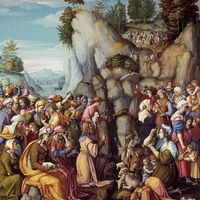
Why did Moses strike the rock? He was a man of faith, whose life had been characterized by trust in God (see, for example, the description of Moses in (Heb 11:24-29). So why did he fall into unbelief ...
Statistics show that 80 percent of new pastors leave the ministry within five years. A friend once remarked, “If they were able to pastor churches without people, they might last ten years.” Most past...
Robert C. McFarlane was a well-known businessman in the Los Angeles area. He had moved to California from Oklahoma in 1970, and within just a few days of his arrival—due to a disastrous misunderstandi...
Exodus 32:1-6 , 1 Samuel 4:3-10, Isaiah 40:18-25, Matthew 16:13-20, Acts 5:1-11 , Psalm 115:4-8
A. W. Tozer once wrote, Left to ourselves we tend immediately to reduce God to manageable terms. We want to get Him where we can use Him, or at least know where He is when we need Him. We want a ...
Peter Drucker suggests that we should always sustain two streams of learning and self-improvement. And though he is speaking specifically about work and career, what he says is equally applicable whet...