From a historical perspective it is atheism that was old and the Christian faith and its good news that burst on the world as new. Once commonly called “atomism,” the genealogy of atheism can be trace...
Proverbs 28:20, Revelation 2:10, Matthew 5:10-12, Matthew 10:22, 2 Corinthians 4:8-10, 1 Peter 4:12-14, Romans 8:35-37, John 15:18-20, Psalm 31:23, Matthew 25:21, 1 Corinthians 4:2, 1 Timothy 6:12, Matthew 24:45-46
Pliny, a Roman Governor serving around 112 AD, faced a challenging situation regarding Christianity. Many Church historians believe that by his time, it had become illegal to profess the Christian fai...
Revelation 2:10, Psalm 71:20-21, Philippians 3:10-14, Luke 21:16-19, 2 Corinthians 4:17-18, Romans 8:17-18, James 1:12
One of the great leaders of the first generation after the apostles was a man named Polycarp. Polycarp, it is believed, was discipled by the apostle John and carried out a long and fruitful ministry i...
Matthew 5:10-12, John 15:18-20, 2 Timothy 3:12, Acts 14:22, Romans 8:35-37, 1 Peter 4:12-14, 2 Corinthians 12:9-10, Acts 1:8, Romans 8:11, Isaiah 41:10
What is the witness of the church in times of persecution? The historical record demonstrates that persecutions of Christians were regular and prolific in the first centuries of the church, especially...
Galatians 6:10, Hebrews 11:13-16, 2 Corinthians 6:9-10, Matthew 5:44, 1 Peter 2:11-12, John 17:15-16
In an early Christian document known as the Epistle to Diognetus (c. A.D. 120-200), the author wrote a response to some propaganda circulating in the Roman Empire. People had spread false rumors about...
Matthew 2:11, James 1:17, Matthew 2:1-12, 2 Corinthians 9:7, Proverbs 22:9, 1 Timothy 6:18, John 3:16
While Christmas traditions vary the world over, gift-giving is a central practice just about anywhere Christ's birth is celebrated. Sometimes gifts are exchanged on December 6, the feast day of S...
Jeremiah 8:20, Matthew 23:37-38; 25:10, Luke 9:61-6, 2 Corinthians 6:2 , Acts 24:24–27, Hebrews 3:7–13
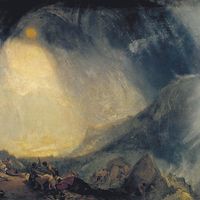
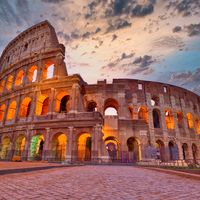
History records the Battle of Cannae as perhaps Rome's most devastating military defeat, orchestrated by the tactical genius of Hannibal of Carthage. In the aftermath of this crushing victory, the...
John 19:38-42, 2 Corinthians 5:17, Romans 6:4, Acts 2:24, Colossians 2:12, Isaiah 53:9, Luke 24:6-7
They took the body down from the cross and one of the few rich men among the first Christians obtained permission to bury it in a rock tomb in his garden the Romans setting a military guard lest there...
The early church was strikingly different from the culture around it in this way - the pagan society was stingy with its money and promiscuous with its body. A pagan gave nobody their money and practi...
Roman imprisonments were brutal. There was no concern for prisoner comfort, no plan for meals or for medical care, and no concern for a just and speedy trial. Paul’s imprisonment in Caesarea went on f...
The city of Corinth was famous for the Isthmian Games, a festival of athletic contests and events similar to the Olympic games. At the end of each contest or event, the athletes would appear before a ...
Matthew 22:39, Philippians 2:3-4, 1 Corinthians 10:24, Romans 15:1-2, Galatians 6:10, Romans 12:10, Acts 20:35, Matthew 25:35-40, Isaiah 58:6-7, Proverbs 19:17, Luke 10:30-37, James 2:15-16, 1 John 3:17, Proverbs 31:8-9, Matthew 25:40, Acts 11:29-30, 2 Corinthians 8:13-15, Acts 2:44-45, Acts 4:32-35, 1 Corinthians 12:25-26
Pursuing the common good has been a strong marker of the Christian church from the very beginning. The early church had many habits that they became known for, of course—including meeting frequently, ...
Esther 4:14, 1 Samuel 15:22-23, Proverbs 24:33-34, Matthew 9:37-38, 2 Corinthians 6:2, Psalm 95:7-8
In 1258, Islam stood on the brink of collapse, with Egypt as its last stronghold. While Islam was struggling, the vast Mongol Empire, under the rule of Kublai Khan, stretched from the Black Sea to the...
Colossians 3:17, Romans 12:2, John 15:4-5, Matthew 5:14-16, 2 Corinthians 5:20, Acts 1:8
This impotence of “systems” is a main reason why Jesus did not send his students out to start governments or even churches as we know them today, which always strongly convey some elements of a human ...
2 Timothy 2:12, James 1:2-4, Matthew 5:11-12, Philippians 1:29, Romans 8:18, 2 Corinthians 4:17, John 15:20
Nevertheless, what was shameful, even odious, to the critics of Christ, was in the eyes of his followers most glorious. They had learnt that the servant was not greater than the master, and that for t...
Romans 6 shines a bright spotlight on the dangerous half-truth, currently fashionable, that ‘God accepts us as we are.’ Will ‘God’s acceptance’ do as a complete grounding of Christian ethics? Emphatic...
The Leader and People pray responsively Father, we pray for your holy Catholic Church; That we all may be one. Grant that every member of the Church may truly and humbly serve you; That your Nam...
Its [Romans] message is not that ‘man was born free, and everywhere he is in chains’, as Rousseau put it at the beginning of The Social Contract (1762); it is rather that human beings are born in sin ...
Every five hundred years, give or take a decade or two, Western culture, along with those parts of the world that have been colonized or colonialized by it, goes through a time of enormous upheaval, a...
Matthew 13:31-33, 2 Corinthians 12:9, Matthew 6:10, Matthew 5:3, 6, 10, 1 Corinthians 1:27, Matthew 26:28, Matthew 19:24, Philippians 3:7, Hebrews 12:2, Matthew 28:19
The context The parables we hear this week are part of a collection of parables of the Kingdom collected by Matthew in chapter 13 of his gospel account. As with the Sermon on the Mount (Matthew 5-7),...
Isaiah 1:1, 10-20, 2 Corinthians 12:9, Matthew 6:10, Matthew 5:3, 10, 1 Corinthians 1:27, 2 Corinthians 12:9, Matthew 26:28, Matthew 19:24, Philippians 3:7, Hebrews 12:2, Matthew 5:6, Matthew 28:19
The context The parables we hear this week are part of a collection of parables of the Kingdom collected by Matthew in chapter 13 of his gospel account. As with the Sermon on the Mount (Matthew 5-7),...
Ephesians 6:10-20, John 8:44, 2 Corinthians 11:14, 1 Peter 5:8, Colossians 2:15, Ephesians 1:19-20, John 4:4, Matthew 16:18, Romans 16:20
Audience Paul’s letter to the Ephesians was probably intended for wider distribution and use among the various churches around Ephesus. As such, there is no particular crisis or pressing issue being ...
Philippians 2:6-8, 2 Corinthians 8:9, John 1:14, Luke 2:7, Isaiah 9:6, John 3:16
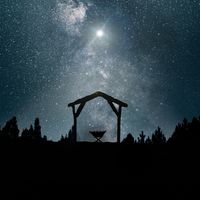
The incarnation has often been described as “The Great Exchange,” whereupon God took on human form so that we might participate in God's divine life (through the Holy Spirit). In a sermon on the n...
Matthew 19:21, Philippians 3:8, Luke 9:23, Romans 8:29, 2 Corinthians 4:17, Hebrews 12:11, Isaiah 58:6-7
Given life’s unpredictability and the inevitability of pain and hardship, what do we do when that pain and hardship show up on our doorsteps? In roughly AD 270, there was a man in Lower Egypt named An...
Hebrews 13:20, Genesis 1:26-28, Genesis 1:26, Genesis 3:14-19, Genesis 3:14, Genesis 8:20-9, Genesis 9:5-6, Genesis 12:1-3, Galatians 3:16, John 8:56-58, 2 Corinthians 3:7-9, Deuteronomy 30:1-10, Deuteronomy 30:1, 2 Samuel 7:4-17, Luke 1:31-33, Acts 1:6, Revelation 19:16, Matthew 26:28, Mark 14:24, Luke 22:20, Hebrews 8:8-12, Galatians 3:13-20
Eternal covenant, Heb 13:20—The redemptive covenant before time began, between the Father and the Son. By this covenant we have eternal redemption, an eternal peace from the ‘God of peace’, through th...
Scripture’s proclivity for a new creation Some people have an aversion to describing a future day when the troubles of this world will have passed into oblivion, the kitchen-table expression being “p...
2 Corinthians 7:1, 1 Corinthians 11:28-29, Ephesians 4:2, James 4:10, 1 John 1:9
Lord Jesus Christ, who when you were about to institute your holy Sacrament at the Last Supper washed the feet of the apostles, teach us by your example the grace of humility: Cleanse us, we beseech y...
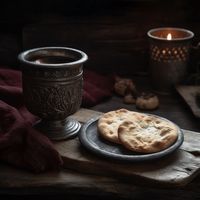
Leader: God made him to be sin who knew no sin, so that in him we might become the righteousness of God. (2 Cor 5:21, ESV) People: For while we were still weak, at the right time Christ died for the...
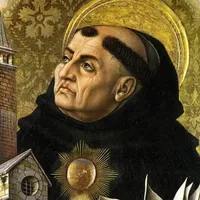
Of the medieval church’s many intellectual leaders, none has had more influence than the philosophical theologian Thomas Aquinas. He was born to a noble family near Naples, Italy, and joined the Domin...