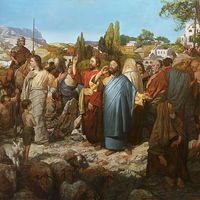
Amos 5:11-12, Micah 2:1-2, 1 Kings 21:1-16, James 5:1-6, Luke 18:1-8, Psalm 10:17-18
The sin of injustice is defined in the Bible as the abuse of power—abusing power by taking from others the good things that God intended for them, namely, their life, liberty, dignity, or the fruits o...
Exodus 1:8–22, 1 Kings 21:, Daniel 5:, Luke 22:24–27 , Acts 12:20–23, Psalm 2:
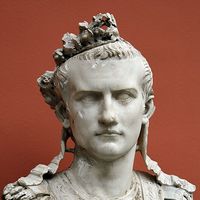
Gaius Caesar, more commonly known as Caligula (AD 12–41), was a Roman emperor notorious for his cruelty. He developed an insatiable appetite for gladiatorial games and other violent spectacles. On one...
Get to know someone really well, and almost without fail, you will discover a person who routinely struggles to get out of bed in the morning. And not just because they’re tired. They can’t get out of...
1 Corinthians 13:, Ruth 1:16-18, 2 Corinthians 11:23-28, Luke 10:25-37, 1 Kings 19:1-18, Matthew 26:36-46, Isaiah 41:10
Adapted from Ch 4 of On Getting out of Bed. Why is Existence Good? Living for the sake of living—doing things so that you can continue to efficiently do things—begs the question, Why live? To live...
In Vanishing Grace , Philip Yancey examines the growing negative perceptions of evangelicals. Although the book was written in 2014, these dynamics have only intensified in the era of MAGA and Ch...
Leviticus 19:15, Proverbs 18:17, 1 Kings 3:9, Matthew 7:1–5, John 7:24, Psalm 141:5
At a recent gathering of seminary professors, one teacher reported that at his school the most damaging charge one student can lodge against another is that the person is being “judgmental.” He found ...
Exodus 18:13-27 , 1 Kings 19:1-9 , Deuteronomy 5:12-15 , Mark 6:30-32, Matthew 11:28-30, Psalm 23:1-3
Dangerous levels of exhaustion usually accumulate over a longer period of time in which we are consistently living beyond human limits, functioning outside our giftedness, or not paying attention to t...
We don’t know what we are doing, and I think this is especially true about the way our society deals with mental health. In just the past fifteen years, I have witnessed a massive shift in how evangel...
One of the dangers of living in a constant state of distraction is that we never go to the bottom of our pain, our sadness, our emptiness, which means we never find that rock-bottom place of the peace...
Exodus 20:8–10, 1 Kings 19:11–12, Ecclesiastes 3:1, Mark 6:31, Matthew 11:28–29, Psalm 23:2–3
People in a hurry never have time for recovery. Their minds have little time to meditate and pray so that problems can be put in perspective. In short, people in our age are showing signs of physiolog...
Most alarming is the absence of peace among our youth. Research from the National Institute of Mental Health (NIMH) is showing an epidemic of mental health problems among eighteen- to twenty-four-year...
Matthew 6:24, 1 Kings 3:1-15, Luke 10:38-42, Philippians 3:7-8, Colossians 3:2, 1 John 2:15-17
For though [something] be good, it may be loved with an evil as well as with a good love: it is loved rightly when it is loved ordinately; evilly, when inordinately.
The drug problems in the U.S. demonstrate this pattern: by heightening powers of perception, chemical stimulants open up a new world to a generation that has never learned to appreciate fully the worl...
On retreat we stop avoiding the pain of the disconnect between our deepest desires and the way we are actually living. We have time and space to reflect on our life rhythms to see if they are really w...
Ministers run the awful risk . . . of ceasing to be witnesses to the presence in their own lives — let alone in the lives of the people they are trying to minister to — of a living God who transcends ...
1 Kings 19:11-13, Ecclesiastes 5:1-2 , Isaiah 30:15, Luke 10:38-42 , Mark 1:35 , Psalm 46:10
The journalist Andrew Sullivan has some strong words of advice for the modern church, If the churches came to understand that the greatest threat to faith today is not hedonism but distraction, p...
Psalm 37:3-6 , Luke 12:16-21, Matthew 6:19-21 , Micah 6:6-8, 1 Kings 3:4-14
What do you want to achieve? Greater riches? Cheaper chicken? A happier life, a longer life? Is it power over your neighbors that you are after? Are you only running away from your death? Or are you s...
1 Kings 20:40, Matthew 6:34, Romans 7:19, Romans 8:11-14
One common mistake is assuming that everyone else finds faith easy, while we alone struggle. Yet there is comfort in recognizing that we are not alone in our pursuit of Christ in the midst of a broken...
Psalm 46:10, 1 Kings 19:9-18, Matthew 5:5-15, Daniel 3:19-27, Exodus 13:21-22, Mark 1:35-39, Luke 5:16, Matthew 4:1-11, Mark 1:12-13, Genesis 32:24-30, Psalm 62:1, Hosea 2:14, Habakkuk 2:1, 1 Samuel 3:1-10, Isaiah 26:3
A certain brother went to Abbot Moses in Scete, and asked him for a good word. And the Elder said to him: Go, sit in your cell and your cell will teach you everything. An elder said: The monk’s ce...
Genesis 2:7, Exodus 20:8–10, 1 Kings 19:5–7, John 1:14, Matthew 11:28–29, Psalm 34:8
In this short excerpt, author Ashley Hales describes the disembodying reality of being glued to screens, and a few ways to become back in touch with our embodied selves: Perhaps we look to a scree...
Bless me, O my Christ, Be Thou my shield protecting me, Aid my steps in the pitful swamp, Lead Thou me to the life eternal; Aid my steps in the pitful swamp, Lead Thou me to the life eternal. Ke...
Context This week’s lectionary text from Mark encompasses two distinct healing narratives, each of which has plenty of material for its own sermon. So the first decision for the preacher should be wh...
Gracious God, in our desire to achieve success and recognition, we have disregarded honesty and integrity in our speech and actions. Forgive us for our shortcuts, white lies, and dishonesty. Help us b...
One of the great problems of history is that the concepts of love and power have usually been contrasted as opposites, polar opposites, so that love is identified with a resignation of power, and powe...
Carl Jung, one of the early pioneers of modern psychology, wrote this from his years of experience as a therapist: The acceptance of oneself is the essence of the moral problem and the epitome of ...











![For though [something] be good, it may](https://a-us.storyblok.com/f/1016915/1200x800/d96dc3a9e0/love.jpg/m/200x200/smart)