James 4:6, Mark 8:36, 1 John 2:17, 1 Corinthians 4:7, Jeremiah 9:23-24, Revelation 3:17
Who, then, are we, we prideful late-twentieth-century creatures? Lord knows, we no longer think of ourselves as belonging to anyone or anything. We do not belong – we own; we possess. And that, to say...
Our faith is not a matter of our hearing what Christ said long ago and “trying to carry it out. The real Son of God is at your side. He is beginning to turn you into the same kind of thing as Himself....
Matthew 7:3-5, Proverbs 27:2, James 4:6, 1 Corinthians 10:12, Romans 12:3, Luke 18:11-14, Jeremiah 17:9
Researchers at the University of London concluded that “a substantial majority of individuals believe themselves to be morally superior to the average person” and that this illusion of ours is “unique...
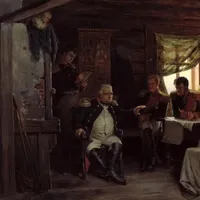
In this excellent little character study, Tolstoy describes the inner monologue of the character Pierre Bezuhov from War & Peace , who is able to justify and convince himself that a promise made ...
1 Corinthians 6:19-20, Titus 2:11-12, James 2:17-26, Hebrews 10:29, 1 Peter 2:16, 1 Samuel 2:
I think the most selfish, self-centered individual in this world is not an unsaved person. It's a Christian who accepts the salvation God offers freely and goes out and lives for himself.
Sometimes people are careless and speak disparagingly of all human righteousness, as if there were no such thing that pleased God. They often cite Isaiah 64:6 which says our righteousness is as filthy...
A Tough Way to Start Ministry You don’t have to spend much time on Twitter or Facebook to be reminded that schadenfreude (taking joy from another's misfortune) is alive and well. Depending on w...
What we need to realize, however, is that there is no such thing as autonomous or “self-grounding” knowledge. All systems of interpretation and all claims to true knowledge are ultimately grounded out...
Almighty God, we trust in our own strength, abilities, and resources. We think too highly of what we have to offer this world. The truth is we cannot do anything without your strength and all we have ...
1 Corinthians 13:2, James 2:19-20, 1 Corinthians 8:1-2, Ecclesiastes 1:18, 1 Corinthians 2:5, Philippians 3:10, Matthew 7:21, 24-27, James 1:22
The Oxford scholar and apologist C. S. Lewis... once closed a lecture to a group of apologists like this: I have found that nothing is more dangerous to one’s own faith than the work of an apologis...
Luke 10:5, Matthew 7:1-5, Luke 6:37-42, Romans 14:10, James 4:11-12, 1 Corinthians 4:5
Even for those of us who follow Jesus on a daily basis, the reality is, our sinful nature has infiltrated our minds, and we often find ourselves, either consciously or unconsciously, judging those aro...
Matthew 17:20, Matthew 19:20, Mark 10:27, Luke 1:37, Luke 18:27, Colossians 3:23-24, 1 Corinthians 15:58, Ephesians 2:10, Philippians 4:13, Philippians 2:13
God is looking for people through whom He can do the impossible. What a pity that we plan only the things we can do by ourselves.
1 Peter 2:9, 1 Corinthians 6:9-11, Ephesians 4:22-24, 1 Thessalonians 4:7, Hebrews 12:14, 1 Peter 1:15-16
The hole in our holiness is that we don’t really care much about it. Passionate exhortation to pursue gospel-driven holiness is barely heard in most of our churches. It’s not that we don’t talk about ...
Paul give us an excellent example of what looking at people from a worldly point of view looks like in Philippians chapter 3: If someone else thinks they have reasons to put confidence in the flesh, ...
Our selves are fashioned; we are adorned with histories that incline us to saunter, swagger, or shuffle. Given our histories, some of us move through the world with a cape; some of us don baggy sweate...
1 Corinthians 13:, Ruth 1:16-18, 2 Corinthians 11:23-28, Luke 10:25-37, 1 Kings 19:1-18, Matthew 26:36-46, Isaiah 41:10
Adapted from Ch 4 of On Getting out of Bed. Why is Existence Good? Living for the sake of living—doing things so that you can continue to efficiently do things—begs the question, Why live? To live...
All: Oh kind and generous God, You have condescended so graciously to our humble needs. You have given us holy baptism to teach us such a simple truth: the blood of Christ washes away our sins. Great ...
Leader: Friends, Paul reminds us that we are "called to be saints.” But we know that our lives often do not reflect this high calling. We forget who we are. We forget whose we are. But the invit...
Ancient Lens What can we learn from the historical context? Relevant Background 1. The Purpose of Paul’s Letter Recall that 1 Corinthians is written to a local church with the purpose of reproof...
The Christian’s self-understanding is that she is precious before God—however much a sinner, however much a failure (or success) she may be by the standards of worldly comparisons—and that every other...
1 Corinthians 2:1-16, Matthew 5:13-20, Isaiah 6:1-13, Psalm 112:1-10
Ancient Lens What can we learn from the historical context? Relevant Background 1. The Purpose of Paul’s Letter 1 Corinthians is written to a local church with the purpose of reproof and cor...
Most Holy Lord, we speak with eloquence, but have no love. We speak truth to power, pontificate, and smugly consider our knowledge superior to others, but display little to no charity. We give sacrifi...
A conversation in 1784 between Charles Simeon (a Calvinist and believer in unconditional predestination) and John Wesley (a follower of Arminius, who denied unconditional predestination) can help us u...
Ruth 2:, Matthew 14:28-31, Nehemiah 2:17-20, Matthew 25:14-30, 1 Corinthians 15:10
Grace is not opposed to effort, it is opposed to earning. Earning is an attitude. Effort is an action. Grace, you know, does not just have to do with forgiveness of sins alone.
The True Self is all about right relationship, not requirements. It’s not about being correct; it’s about being connected, which you always were—you just didn’t realize it.




![[The decay of Logic results from an]](https://images.unsplash.com/photo-1709399610754-921b7a9ef3b7?ixid=M3w1NzU0OTZ8MHwxfHNlYXJjaHw0NXx8bG9naWN8ZW58MHwwfHx8MTcxMjA3NTI4Mnww&ixlib=rb-4.0.3&q=80&auto=compress&fit=crop&w=200&h=200)