Imagine celebrating a birthday party for your child. You buy a cake, invite guests, and give her presents. Now imagine discussing the party with your spouse later that night. Your spouse asks you what...
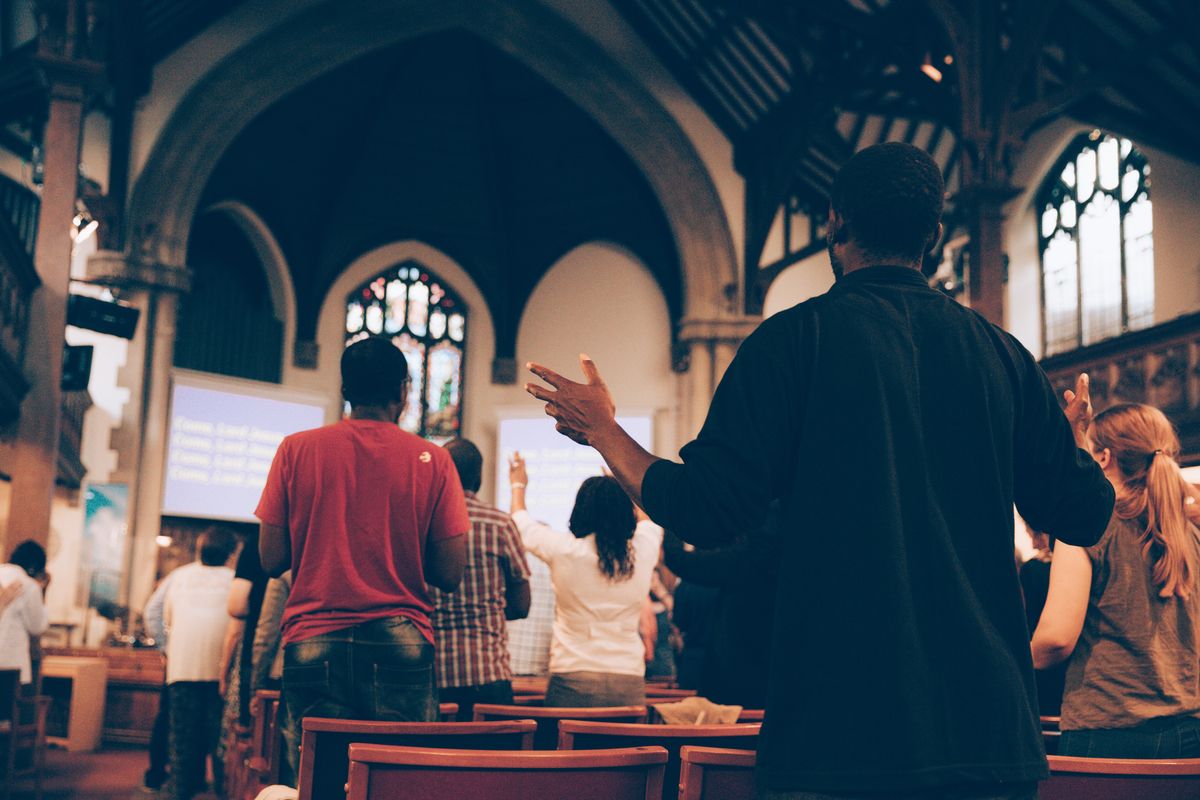
Human beings are at their core defined by what they worship rather than primarily by what they think, know, or believe. That is bound up with the central Augustinian claim that we are what we love.
The word worship comes from the Old English weorthscipe, which combines two words meaning “ascribe worth.” The Trinity can be said to be always at worship because the three persons of the Godhead perf...
Look, the insidious thing about these forms of worship is not that they're evil or sinful; it is that they are unconscious. They are default-settings. They're the kind of worship you just grad...
O God, you are indeed worthy of our praise and worship. Yet we turn away and worship other gods. We find ourselves at the altar of our careers, our financial security, our self-image, our status. We t...
Matthew 6:1-6, Deuteronomy 6:4-9, Matthew 23:4, 5, 13-36, Mark 12:42, Luke 21:2, Isaiah 58:6, Joel 2:1-2, 12-17
Ancient Lens What can we learn from the historical context? "Hear O Israel..." The Shema (Deuteronomy 6:4-9) commands the Israelites to love the Lord their God with heart, soul, and m...
When we believe that we should be satisfied rather than God glorified in our worship, then we put God below ourselves as though He had been made for us rather than that we had been made for Him.
Colossians 1:27, John 15:4-5, Galatians 2:20, Luke 24:13-35, Acts 2:1-4, Romans 12:1, 2 Corinthians 5:17-20
Nonetheless, this singular fact, full to the bursting, remains. It is a fact grounded in infinite outpouring: Christ is in me; I am in Christ. . . . Christ in me is not some narrow, introspective, dis...
Parakalō There are a lot of interesting words in this passage, including the second one. In the NIV, it says, “I urge...” In English, “urge” has some range. If I “urge you to reconsider,” we all kno...
Great and loving God, we know that one day all peoples will worship you on your mountain. We struggle to live into that reality. We turn inward, thinking mostly of ourselves rather than giving you glo...
Preaching Commentary Parakalō There are a lot of interesting words in this passage, including the second one. In the NIV, it says, “I urge...” In English, “urge” has some range. If I “urge you to r...
In his thoughtful book, Our Good Crisis: Overcoming Moral Chaos with the Beatitudes, Jonathan K. Dodson shares a funny, yet poingnant encounter with a man who wanted to keep religion private: I ...
What’s at Stake in Worship? Everything. that’s what's at stake in worship. The urgent, indeed troubling, message of Scripture is that everything that matters is at stake in worship. Worship names ...
In the day-to-day trenches of adult life, there is actually no such thing as atheism. There is no such thing as not worshipping. Everybody worships. The only choice we get is what to worship. And the ...
Drama at Its Finest The transfiguration is theatrical. It is drama at its finest. The mountain peak as the stage of the performance, the appearance of the greatest dramatis personae known to Israel, ...
Preaching Commentary Drama at Its Finest The transfiguration is theatrical. It is drama at its finest. The mountain peak as the stage of the performance, the appearance of the greatest dramatis per...
Worship means, literally, acknowledging the worth of something or someone. It means recognizing and saying that someone or something is worthy of praise. It means celebrating the worth of someone or s...
Mark 9:2-9, Exodus 24:16-18, Daniel 7:9, 13-14, Revelation 1:14-15, Mark 1:11, Isaiah 53:null, Psalm 2:6-8, 2 Peter 1:17-18
Preaching Commentary Context The Gospel of Mark presents two clear phases of Jesus’ ministry. The first phase (chapters 1-8) takes place in Galilee. It is characterized by words and deeds of power ...
Psalm 42:5, Romans 12:15, Ephesians 4:26, Lamentations 3:19-23, James 4:8-9
Too often we are given a choice—emotions or faith and belief. Yet as Dan Allender and Tremper Longman observe, Emotion links our internal and external worlds. To be aware of what we feel can open ...
In the day-to-day trenches of adult life, there is actually no such thing as atheism. There is no such thing as not worshipping. Everybody worships. The only choice we get is what to worship. And the ...
Genesis 1:26-27, Genesis 1:27, Song of Solomon 4:7-10, Proverbs 5:18-19 , 1 Corinthians 6:19-20 , Ephesians 5:31-32, Psalm 139:13-14
The spiritual discipline of honoring the body helps us find our way between the excesses of a culture that glorifies and objectifies the body and the excesses of Christian tradition that have often de...
Preaching commentary Summary While we don’t think as much about it today, people throughout Biblical times were very interested in different kinds of spiritual creatures. Here in the book of Revela...
Summary of the Text Songs of Ascent Psalm 133 is part of the Psalter’s collection of the Songs of Ascent, Psalms 120-134. The Songs of Ascent were sung by the throng of pilgrims making their way to ...
Psalm 119:9-16, John 21:25, Hebrews 12:2, Matthew 6:19-21, John 14:6
Ancient lens What's the historical context? Confronting the Giant Psalm 119 is the longest of all the Psalms and for this reason it has received the nickname “the Giant Psalm.” The Psalm is a...
Matthew 6:1-6, 16-21, Deuteronomy 6:4-9, Matthew 23:4, 5, 13-36, Mark 12:42, Luke 21:2, Isaiah 58:6, Joel 2:1-2, 12-17
AIM Commentary Ancient Lens What can we learn from the historical context? "Hear O Israel..." The Shema (Deuteronomy 6:4-9) commands the Israelites to love the Lord their God with h...
Preaching Commentary Summary of the Text Songs of Ascent Psalm 133 is part of the Psalter’s collection of the Songs of Ascent, Psalms 120-134. The Songs of Ascent were sung by the throng of pilgri...