Gracious God, in six days you created all things. On the seventh day you finished your work by resting. You also blessed and hallowed the seventh day, setting it aside as a day of rest. Teach me, Lord...
Isaiah 1:13-17, 1 Samuel 8:19-20 , Hosea 4:6, Romans 12:2, Matthew 23:27-28, Psalm 78:5-8
By failing to come to grips with how cultural dysfunctions deeply impact the health of the church, our leaders will continue to fail to discern an essential reality concerning the nature of change: Cu...
Psalm 2:10-11, John 18:36, Matthew 5:13-16, Jeremiah 29:7, Micah 6:8, 1 Samuel 15:22
We can’t separate what we believe in the political arena from who we are in Christ and what obedience to God demands...That said, not every tenet of Christianity should become the law of the state. We...
A strong church once inscribed these words on an archway leading to the churchyard. Over time, two things happened: the church lost its passion for Jesus and His gospel, and ivy began to grow on the a...
Materialism is not fundamentally an economic problem, but a cultural one... a spiritual issue. It runs to the depths of our souls, and, for this reason, needs to be understood less in terms of budgets...
In March 1845, Henry David Thoreau received a letter from poet William Ellery Channing. “Build yourself a hut, & there begin the grand process of devouring yourself alive,” wrote Channing. “I see ...
I must register a certain impatience with the faddish equation, never suggested by me, of the term identity with the question, “Who am I?” This question nobody would ask himself except in a more or le...
Gracious God, we don’t live as Christ did. Although You give us specific instructions for an ordered way of life that stands out from the rest of the world, we settle for lukewarm Christianity. Our li...
Genesis 32:22-32, Exodus 33:18-23 , 1 Samuel 1:9-20, Psalm 42:1-2, Mark 10:46-52, John 4:7-26
We are people of desire. We want things. We long for things. It is primal to our nature to yearn. As Saint Augustine reflected, “The whole life of the good Christian is a holy longing. . . . That is o...
Cultures like ours encourage us to consider all aspects of our lives in terms of self-interest. How do we cultivate a life marked by God’s love – a love that is always directed toward the needs of oth...
Loving and grace-filled God, we confess that it is difficult to keep you first in our lives. There are so many urgent demands on us that we find it hard to focus ourselves on you. The culture around u...
Isaiah 53:4-5, 1 Samuel 17:, 1 John 12:24-25, Matthew 16:25, Psalm 116:15
Whoever seeks to avoid danger at all costs may ultimately lose the fullness of life, but the one who, out of love for Christ, dedicates themselves to serving others discovers a life that endures. Arch...
Romans 12:2, Galatians 6:1, Proverbs 9:10, James 1:4, Isaiah 61:3
Think of an ancient icon of Christ. Imagine that a thousand-year-old Christ Pantocrator painted on a wooden panel is discovered in some forgotten monastery. The image of Christ is there, but it’s cove...
I recently visited a missions school at a large church in Waco, Texas, and decided to try a similar test in a class-sized proportion. “Tell me,” I said to the group, “what is the gospel?” A young lady...
Mark 9:24, Romans 10:17, John 20:27, 1 John 4:1, 1 Thessalonians 5:21, Proverbs 3:5-6
Have you ever noticed that the phrases in our culture favor doubt over faith? The famed missionary and theologian Lesslie Newbigin pointed this out when we speak of “Honest doubts” and “blind faith”. ...
Leviticus 25:10-17, Deuteronomy 15:7-11, Amos 5:11-15, James 82:, Luke 4:18-19
There is no social evil, no form of injustice whether of the feudal or the capitalist order which has not been sanctified in some way or other by religious sentiment and thereby rendered more impervio...
1 Samuel 24:10-12, Proverbs 16:8, Romans 12:17-18, Psalm 72:1-4, Micah 6:8, Matthew 5:13-16
When in conflict we should demonstrate that our public witness is more important than winning a political battle. This means that if our side has to do something unloving or corrupt to win, then it’s ...
Isaiah 49:6, Revelation 7:9, John 3:16, Galatians 3:28, Romans 10:12, Acts 1:8, Matthew 28:19-20
The Gospel as such has no native country. He who goes out humbly with Christ in the world of all races will perpetually discover the multiple, but constant, relevance of what he takes. It takes a whol...
The family has long been a haven in a heartless world, the one place immune to market forces and economic calculations, where the personal, the private, and the emotional hold sway. Yet. . . that is ...
Many have heard of the polymath and famous atheist Bertrand Russell (1872-1970), whose career as a public intellectual touched on a variety of disciplines, including philosophy (he is considered one o...
Leviticus 25:23, Deuteronomy 8:7-10, Micah 7:8, Psalm 82:3, James 2:14-17
When the missionaries came to Africa they had the Bible and we had the land. They said 'Let us pray.' We closed our eyes. When we opened them we had the Bible and they had the land.” For more,...
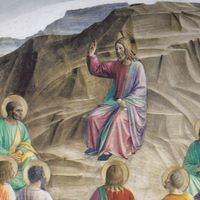
The Sermon on the Mount is probably the best-known part of the teaching of Jesus, though arguably it is the least understood, and certainly it is the least obeyed. It is the nearest thing to a manifes...
Luke 15:11-32, Psalm 23:null, John 21:15-19, Luke 19:1-10, Genesis 45:4-7, Psalm 23:5, 2 Corinthians 5:18-19
In the old American South (and in many places in the American North) a European American who invited an African American as a guest to an expensive restaurant in a white section of town would subject ...
There are no ordinary people. You have never talked to a mere mortal. Nations, cultures, arts, civilizations—these are mortal, and their life is to ours as the life of a gnat.
When the movie The Da Vinci Code hit the theaters and the swirl of related controversy began to pick up speed, I decided finally to read the book so that I wouldn’t be found ignorant dinner parties. I...
Philippians 4:8, Exodus 32:, Ecclesiastes 12:13, Matthew 19:16-30, Proverbs 4:23, Romans 12:2, 1 John 2:15-17
Orwell feared we would become a captive culture. Huxley feared that we would become a trivial culture. . . . Orwell feared that what we hate will ruin us. Huxley feared that what we love will ruin us.
Why was it virtually impossible not to believe in God in, say, 1500 in our Western society, while in [the twenty-first century] many of us find this not only easy, but even inescapable?