John Fiske, a Harvard scholar, once visited Herbert Spencer, regarded as one of the greatest philosophers of his time in England. During their conversation, Spencer asked about Mrs. Fiske and the chil...
In 1889, the French novelist Paul Bourget penned The Disciple , where he depicted the life of a renowned philosopher and psychologist, whose existence was marked by a seemingly monotonous routine...
Genesis 2:7, 1 Kings 19:4-8 , Ecclesiastes 12:7 , Matthew 11:28-30, 3 John 1:2, Psalm 43:5, Psalm 42:5
The soul can be difficult to define. The great theologian Karl Barth confessed, “We shall search the Old and New Testaments in vain for a theory of the relation between the soul and body.” Your soul i...
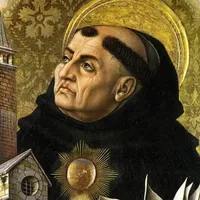
Of the medieval church’s many intellectual leaders, none has had more influence than the philosophical theologian Thomas Aquinas. He was born to a noble family near Naples, Italy, and joined the Domin...
When John Stuart Mill—the influential philosopher and political economist—arrived at Thomas Carlyle's door that evening, his face drained of color, bearing the devastating news that the manuscript...
In his poem Cocktail Party , T. S. Eliot captures a fundamental truth about human nature and the source of much hurt in the world. People’s actions are rarely driven by outright malice—intended t...
A doctor, an engineer, and a politician were arguing as to which profession was older. “Well,” argued the doctor, “without a physician mankind could not have survived, so I am sure that mine is the ol...
The recognition of humanity's flawed nature is not exclusive to Christianity. Aristotle, in his work Ethics , compares human nature to a warped piece of wood. To rectify this warp, a skilled ...
In 1882—seven years before his descent into madness—Friedrich Nietzsche published a parable called The Madman . In the parable, a madman comes into a village on a bright, sunny morning holding al...
1 Corinthians 7:1-9, Matthew 19:3-12 , Psalm 139:13-16 , Genesis 2:18-25, Song of Solomon 4:1-16, Proverbs 5:15-19, Genesis 2:18
James Nelson describes sexuality as the central clue to what God is up to in the world. While this might seem a little over the top, when you think about it, sexuality factors integrally in our relati...
A physician, a civil engineer, and a politician were arguing about what was the oldest profession in the world. The physician remarked, “Well, in the Bible, it says that God created Eve from a rib tak...
Scientist John Haldane once proposed to the English priest Ronald Knox that, given the vast number of planets in the universe, the emergence of life by sheer chance was inevitable. Knox responded with...
1 Corinthians 9:25-27, Genesis 39:7-12, 1 Kings 3:16-28, Esther 4:, Titus 2:11-12, Daniel 1:8-16, Joshua 1:9
In his book On the Morals of the Catholic Church, Augustine reinterpreted the classical virtues through the distinctly Christian lens of love: I hold that virtue is nothing other than the perfect lo...
Luke 20:27-38, Mark 12:18-27, Matthew 22:23-33, 1 Corinthians 15:, Genesis 2:18-25
Ancient Lens What can we learn from the historical context? Worldviews Collide In this passage, we have a clash of worldviews similar to some that we find today. While the Sadducees were not mat...
God is the author of the physical world, and in his wisdom, he designed physical realities to convey spiritual mysteries. “There is no good trying to be more spiritual than God,” as C. S. Lewis insist...
Philippians 3:20, John 17:28-38, John 18:36, Hebrews 13:14, Hebrews 11:8-10, Matthew 22:21, Romans 13:1, 1 John 2:16, James 4:4, Genesis 11:1-9
In 410 AD, Rome fell to the barbarian Germanic tribe known as the Visigoths, led by King Alaric. The idea of a “Christian” city (and empire) falling was a terrible defeat, not just militarily, but als...
Before my mentor, Dallas Willard, passed over to glory, I asked him what he thought about the rapid rise of the Christian spiritual formation movement. He said, “It is a wonderful thing, but my fear i...
Luke 20:27-38, Mark 12:18-27, Matthew 22:23-33, 1 Corinthians 15:, Genesis 2:18-25
Ancient Lens What can we learn from the historical context? Worldviews Collide In this passage, we have a clash of worldviews similar to some that we find today. While the Sadducees were not mat...
In the land whose founding metaphor was the mutuality of John Winthrop’s seventeenth-century vision of a “city set on a hill,” we live more and more in estranged, hostile, exclusive enclaves, linked o...
Many of the modern controversies surrounding the Bible—for example, human sexuality, creationism and the “openness” of God—revolve around questions concerning hermeneutics. The science of hermeneutics...
Exodus 20:1–17, Genesis 22:1–14 , Micah 6:6–8 , Luke 10:25–37 , Matthew 5:17–20, Psalm 82:3–4
Interpretive strategies have gone through cycles of strict-constructionist (or Originalism) and broad-constructionist (or Living Constitution) perspectives. Originally the procedure of interpreting th...
Plenipotentiary Anyone know what a “plenipotentiary” is? Try that compound Latin word on for size! It is derived from the Latin words plenus “full” and potens “power.” It refers to a person who p...
Genesis 1:26-27 , Exodus 33:11-23 , Isaiah 43:1-4, John 10:1-15 , Luke 7:36-50, Psalm 139:1-6, 13-16
I am convinced that the scourge of our scientific and technological age is depersonalization. There is a heartbeat pulsating at the center of the universe, giving life and meaning to everything, but o...
The atheist author Richard Dawkins, who wrote, “The universe, at the bottom, has no design, no purpose, no evil, and no other good. Nothing but blind, pitiless indifference. DNA neither knows nor care...
An attempt to wrest from God the prerogatives of absolute freedom and infinity leads to the inversion of Pentecost and what is in effect a new Babel. 'Postmodernism' represents that Babel perf...
Genesis 1:1–3 , Exodus 20:1–17, Daniel 6:16–23, Luke 10:25–37, Romans 3:21–26, Psalm 119:105
In the sixteenth century the Reformers declared their total confidence in what they called the perspicuity of Scripture. What they meant by that technical term was the clarity of Scripture. They maint...
To enter into the realm of contemplation one must in a certain sense die: but this death is in fact the entrance into a higher life. It is a death for the sake of life, which leaves behind all that we...
So how can we form deep Christian convictions without dividing the church? Let’s take a deeper look at convictions themselves. Convictions are like light: they come in many colors and form across a sp...