To frame is to put a language boundary around our experience. It is to name what happens in particular ways, to say how we see the world, and to see the world how we say it is. Framing includes tellin...
Have you ever heard of the Greatest Books of the Western World collection? Published by Encyclopedia Britannica in 1954, this comprehensive series was edited by Robert Hutchins and Mortimer J. A...
Deuteronomy 6:6–7, 2 Timothy 2:2, Proverbs 22:6, Daniel 6:3–4, Matthew 28:19–20, Psalm 78:4–7
The U of C [University of Chicago] has produced ninety-eight Nobel laureates, but I’m not sure any of them left as big an imprint on that university as its famed football coach, Amos Alonzo Stagg. Sta...
Deuteronomy 6:6-7, Proverbs 22:6, 1 Samuel 1:27-28, Luke 2:51-52, Ephesians 6:1-4, Psalm 127:3-5
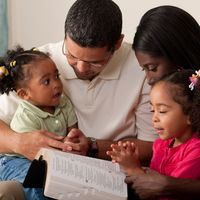
I want to suggest a pretty radical idea about what family is for. Family is about the forming of persons. Being a person is a gift, like life itself—we are born as human beings made in the image of Go...
This passage from Joshua underscores a central element of the biblical view of meditation: obedience. This is in marked contrast to the various forms of meditation in many religions around the world. ...
The most powerful choices we will make in our lives are not about specific decisions but about patterns of life: the nudges and disciplines that will shape all our other choices. This is especially tr...
Matthew 6:1-6, Deuteronomy 6:4-9, Matthew 23:4, 5, 13-36, Mark 12:42, Luke 21:2, Isaiah 58:6, Joel 2:1-2, 12-17
Ancient Lens What can we learn from the historical context? "Hear O Israel..." The Shema (Deuteronomy 6:4-9) commands the Israelites to love the Lord their God with heart, soul, and m...
Matthew 6:1-6, 16-21, Deuteronomy 6:4-9, Matthew 23:4, 5, 13-36, Mark 12:42, Luke 21:2, Isaiah 58:6, Joel 2:1-2, 12-17
AIM Commentary Ancient Lens What can we learn from the historical context? "Hear O Israel..." The Shema (Deuteronomy 6:4-9) commands the Israelites to love the Lord their God with h...