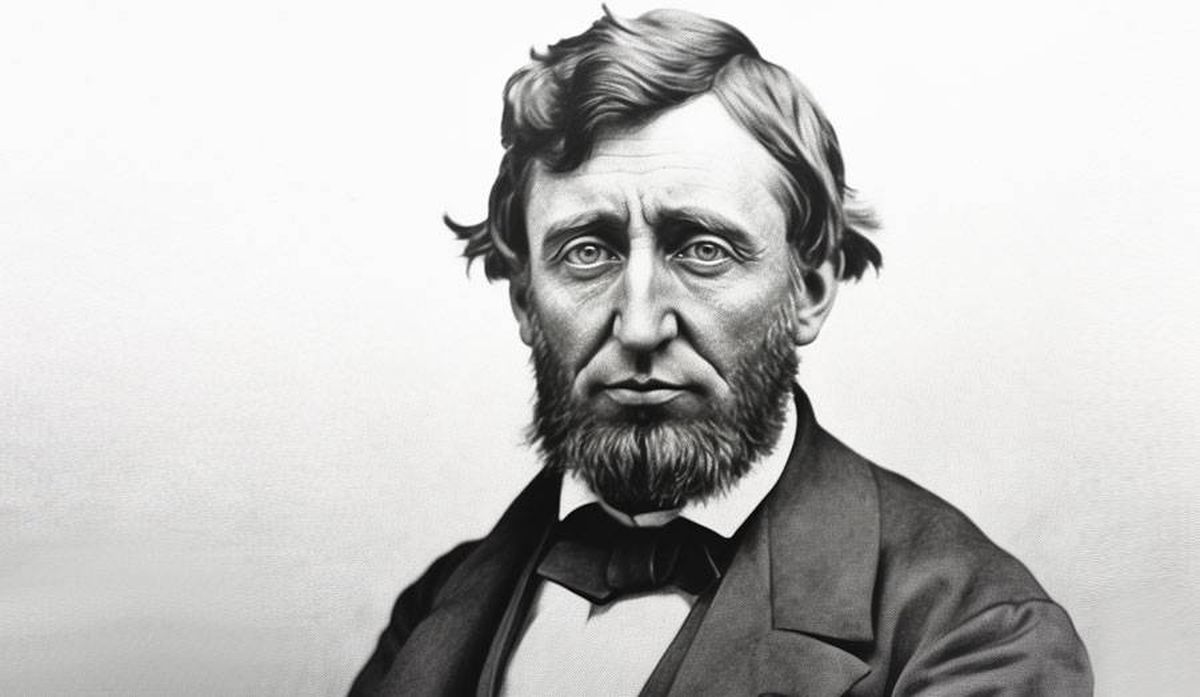
Henry David Thoreau
Henry David Thoreau (1817–1862) was an American essayist, poet, philosopher, and naturalist, best known for his pioneering work in environmentalism and his reflections on individualism, simplicity, and civil disobedience. Thoreau's most famous work, Walden, is a philosophical exploration of the transcendentalist movement, written during his two-year experiment in simple living at Walden Pond in Concord, Massachusetts. Through this work, he explored themes of self-reliance, the beauty of nature, and the importance of connecting with the natural world in an increasingly industrialized society.
Thoreau was deeply influenced by the teachings of his mentor, Ralph Waldo Emerson, and his association with the transcendentalist movement, which emphasized the spiritual connection between humanity and nature. Thoreau’s observations of nature, recorded in his journals, became a cornerstone of his philosophical thinking, and his writing continues to inspire readers to live more intentionally and harmoniously with the environment.
In addition to his environmental and philosophical contributions, Thoreau is also known for his advocacy of civil disobedience. His essay Civil Disobedience was written after his brief imprisonment for refusing to pay a poll tax, protesting the U.S. government’s actions in Mexico and the institution of slavery. Thoreau argued that individuals have a moral duty to resist government actions that are unjust, influencing subsequent social movements and leaders, including Mahatma Gandhi and Martin Luther King Jr.
Throughout his life, Thoreau remained committed to solitude, contemplation, and intellectual independence. His work transcends generations, advocating for a life of simplicity, mindfulness, and resistance to social and political injustices. His legacy endures today through his writings, which continue to challenge readers to live purposefully and with a greater appreciation for nature, personal autonomy, and social responsibility.