Over the years, I have led hundreds of retreats that have at their center a few hours to be alone and quiet in listening prayer. At one such retreat, one participant shared a conversation she had wit...
The soul’s infinite capacity to desire is the mirror image of God’s infinite capacity to give. . . . The unlimited need of the soul matches the unlimited grace of God.
Genesis 2:7, 1 Kings 19:4-8 , Ecclesiastes 12:7 , Matthew 11:28-30, 3 John 1:2, Psalm 43:5, Psalm 42:5
The soul can be difficult to define. The great theologian Karl Barth confessed, “We shall search the Old and New Testaments in vain for a theory of the relation between the soul and body.” Your soul i...
While the search for the divine has been somewhat crowded out in modern times by our busy and overstimulated lives, it is still one of the most universal of human strivings. C. S. Lewis describes this...
Since the seventh century, the Western church has observed the start of Lent on Ash Wednesday—the fortieth day before Easter, not counting Sundays. In addition to providing ample time for self-examina...
As I have worked to clarify my calling, I have learned to pay attention to my energy levels in response to different activities. If I experience a particular activity as being inordinately draining, I...
1 Kings 19:11-13 , Ecclesiastes 5:1-2 , Isaiah 30:15 , Luke 10:38-42, Matthew 6:6, Psalm 46:10
But it’s not so simple, that sort of “quiet hour”. It has to be learned. A lot of unimportant inner litter and bits and pieces have to be swept out first. Even a small head can be piled high inside wi...
Galatians 6:9, John 3:8, Ecclesiastes 11:5, Isaiah 55:10-11, John 6:44
Writing about ministering to postmodern skeptics, Don Everts and Doug Schaupp share a helpful insight into the mystery of God's movement: The first lesson they have taught us about the path to f...
It was Saint Thomas Aquinas who coined the Latin phrase anima forma corporis , which means “the soul is the form of the body.” The soul, as I said previously, is defined as the first principle of...
After twenty years of listening to the yearnings of people’s hearts [as a counselor], I am convinced that all human beings have an inborn desire for God.
We grow in part by confessing our faults and weaknesses to each other (James 5:16; Eccl. 4:10). If we are always being strong and without needs, we are not growing, and we are setting ourselves up for...
Genesis 3:1-7 , Exodus 32:1-6 , Ecclesiastes 2:1-11, Psalm 73:25-26, Matthew 4:1-11 , James 1:13-15
The church fathers consistently acknowledged the beauty and goodness of desire (e.g., Augustine, above), but they were not naive to the potential for desire to be bent by sin. They knew that our longi...
God calls His people to lots of different things. Sometimes you feel a sense of calling to your job and, you know what, sometimes you don’t. You just work. I’m extremely thankful that I love what I do...
Job 38:1-7, Ecclesiastes 3:11, Genesis 32:22-32, Luke 1:26-38, Matthew 16:13-17, Psalm 8:3-4
It is as if in creating us God asked a question, and in awakening us to contemplation He answered the question, so that the contemplative is at the same time, question and answer.
Ephesians 5:18-21, Proverbs 20:1, 1 Corinthians 10:23-24, Colossians 3:5, James 1:12-15, Matthew 6:19-24, Ecclesiastes 6:9
In her thought-provoking book, Teach us to Want , Jen Pollock Michel describes the tension in listening to our deepest desires: some of them these desires are integral to our identity, but they a...
The search for knowledge can go wrong, not as a result of individual, erroneous judgments or of mistakes creeping in at different points, but because of one single mistake at the beginning… Faith does...
Ecclesiastes 4:9-12, 1 John 4:7-8, Mark 12:31, 1 Thessalonians 5:11, John 13:34
Mike Mason recounts how his friend Daniel Adair once said: Whenever I meet someone new, I take that person and fix him or her in my heart. To do this, I literally see that person as a star, and I ...
Does God take our work seriously? Consider these words from Arthur F. Miller: It is wrong, it is sin, to accept or remain in a position that you know is a mismatch for you. Perhaps that’s a form of ...
The imposition of ashes, now a familiar Ash Wednesday tradition in Catholic, Anglican, and many Protestant churches, has its roots in an early church penitential practice. For people who had been excl...
1 Samuel 1:12-15, Daniel 6:10, James 5:16, Ecclesiastes 5:2, Romans 8:26
When prayer consists of the same spoken sentences on every occasion, naturally we wonder at the value of the practice. If our prayers bore us, do they also bore God? Does God really need to hear me sa...
Maybe the most sacred function of memory is just that: to render the distinction between the past, present, and future ultimately meaningless: to enable us at some level of our being to inhabit that s...
Genesis 22:1-19, Exodus 32:1-35, Ecclesiastes 1:1-18, Matthew 20:1-16 , John 6:53-66, Psalm 73:1-28
Thomas Merton’s words about the Bible in general apply to the Old Testament in particular: There is, in a word, nothing comfortable about the Bible — until we manage to get so used to it that we ...
Jeremiah 29:5-7, Ecclesiastes 3:1-2, Matthew 6:34, Colossians 3:23-24, Psalm 46:10
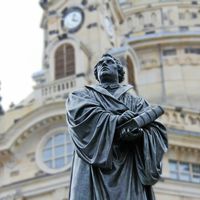
There’s a well-shared (though probably apocryphal) story that took place about the morning, the Protestant Reformer Martin Luther was having a theological discussion with a few of his friends. One...
Thomas Aquinas, the famous medieval theologian, created one of the greatest intellectual achievements of Western civilization in his Summa Theologica. It’s a massive work: thirty-eight treatises, thre...
If you’ve been around a kid who’s just learned to ask “why?”, it can be a bit much. You’ll be asked, “why is grass green?” “Why do birds fly?” “Why do I get hungry?” and much, much, more. Pa...
Many have heard of the polymath and famous atheist Bertrand Russell (1872-1970), whose career as a public intellectual touched on a variety of disciplines, including philosophy (he is considered one o...