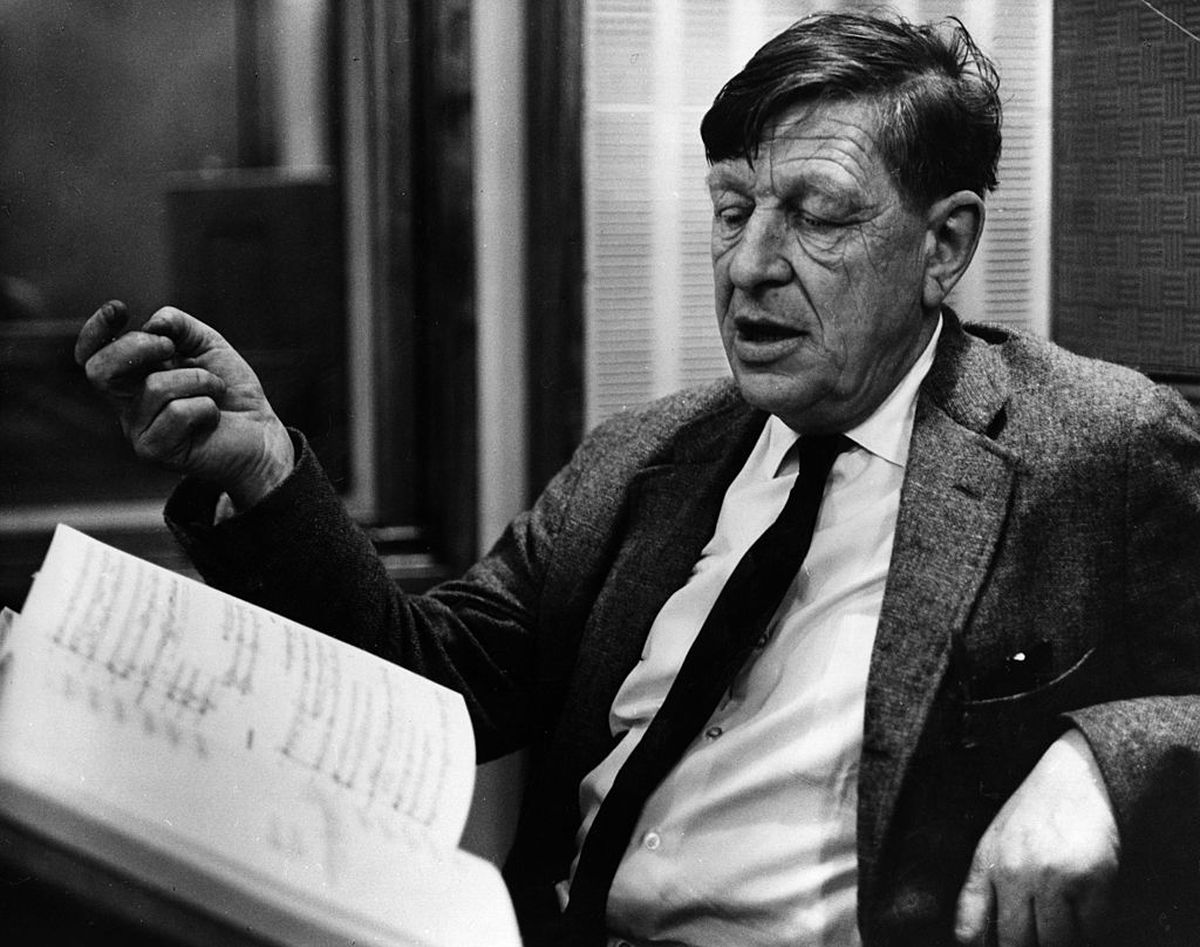
W. H. Auden
Wystan Hugh Auden (1907–1973) was an influential Anglo-American poet, playwright, essayist, and literary critic, renowned for his technical mastery, intellectual depth, and exploration of complex themes such as love, politics, religion, and human suffering. Born on February 21, 1907, in York, England, Auden was the youngest of three sons in a family with a strong academic and religious heritage.
Educated at Gresham’s School and later at Christ Church, Oxford, Auden initially studied biology before switching to English literature. While at Oxford, he became part of a literary circle that included Christopher Isherwood and Stephen Spender, figures who would influence his early work. Auden’s early poetry reflected his fascination with psychoanalysis, Marxism, and industrial modernity, establishing him as a leading voice of his generation.
Auden’s first published collection, Poems (1930), showcased his innovative use of form and meter, alongside his acute social and political awareness. Throughout the 1930s, his work grappled with the turbulence of the interwar period, including rising fascism and social inequality. In 1939, Auden moved to the United States, where he became an American citizen in 1946. This period marked a spiritual turning point as he returned to Christianity, which deeply informed his later works.
Auden’s poetry, including masterpieces like The Age of Anxiety (1947), which won the Pulitzer Prize, and For the Time Being (1944), reflects his evolving concerns with theology, existentialism, and the human condition. Beyond poetry, Auden’s essays and criticism demonstrate his wide-ranging intellect and engagement with the cultural and moral questions of his time.
Auden spent his later years in Austria and Oxford, teaching and writing until his death on September 29, 1973. His legacy endures as one of the 20th century’s greatest poets, celebrated for his profound influence on literature and his timeless exploration of the human spirit.