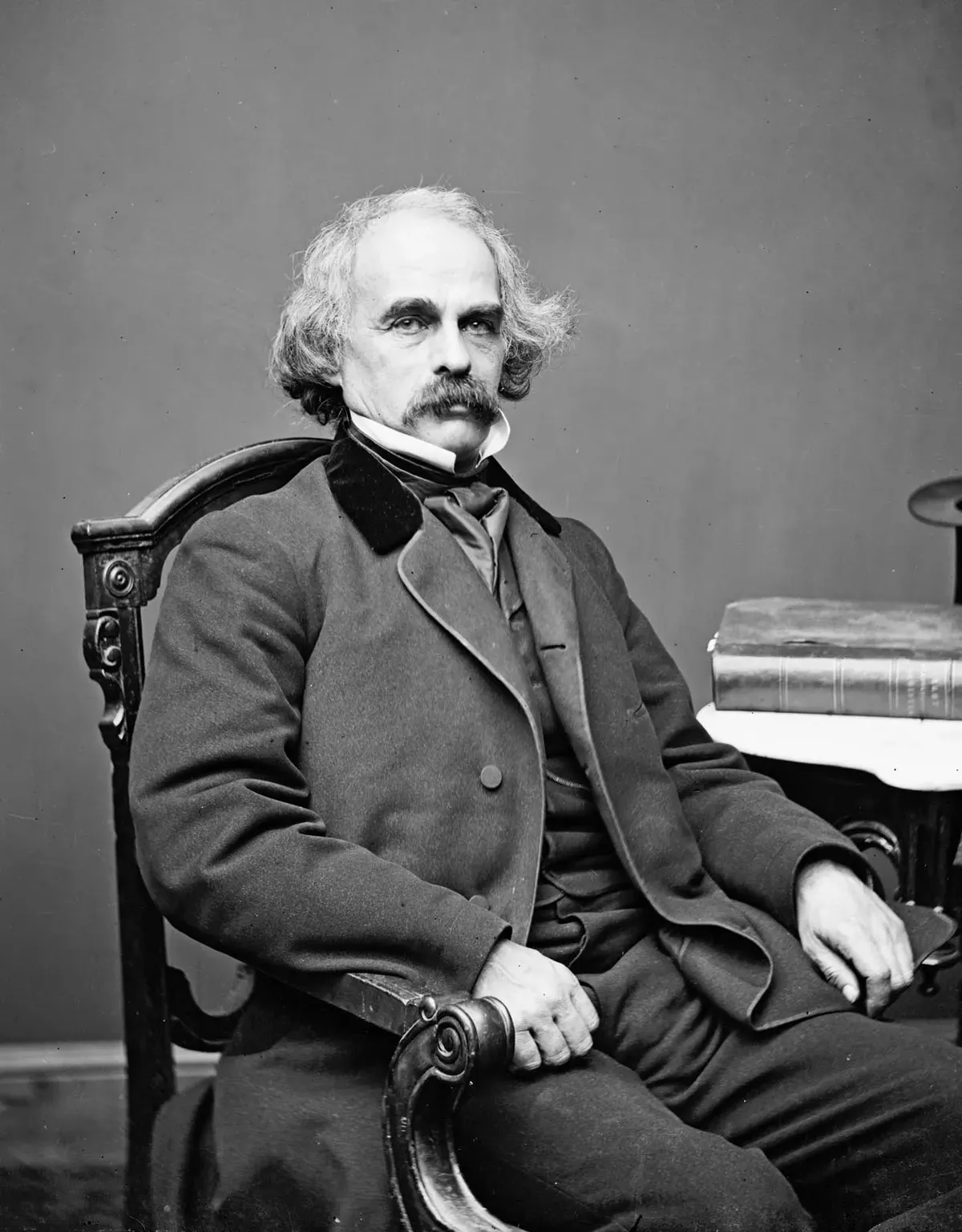
Nathaniel Hawthorne
Nathaniel Hawthorne (1804–1864) was an American novelist, short story writer, and key figure in American literature, renowned for his exploration of moral and psychological themes, especially concerning sin, guilt, and the complexities of human nature. Born in Salem, Massachusetts, Hawthorne's early life was deeply influenced by his family’s history, notably his ancestor, John Hathorne, a judge involved in the Salem witch trials, which haunted the author throughout his life and works.
Hawthorne attended Bowdoin College, where he formed lifelong friendships with future writers, including Henry Wadsworth Longfellow. After graduation, he worked in various jobs, including as a customs official, but his true passion was writing. His early works, such as Twice-Told Tales (1837), drew attention for their deep psychological insight and atmospheric storytelling.
Hawthorne’s most famous work, The Scarlet Letter (1850), delves into the moral and social consequences of sin through the story of Hester Prynne, a woman publicly shamed for adultery in Puritan New England. The novel is a profound meditation on guilt, redemption, and the complexities of human relationships. Hawthorne’s other notable works include The House of the Seven Gables (1851), The Blithedale Romance (1852), and The Marble Faun (1860), which also explore themes of moral conflict and societal constraints.
In his personal life, Hawthorne married Sophia Peabody in 1842, and they had three children. The family lived in various locations, including a period in the Old Manse in Concord, Massachusetts, where Hawthorne interacted with prominent transcendentalists like Ralph Waldo Emerson and Louisa May Alcott.
Hawthorne’s works, which blend allegory, symbolism, and psychological depth, have cemented his legacy as one of the greatest American writers. His exploration of sin, morality, and the human psyche continues to resonate with readers and scholars today.