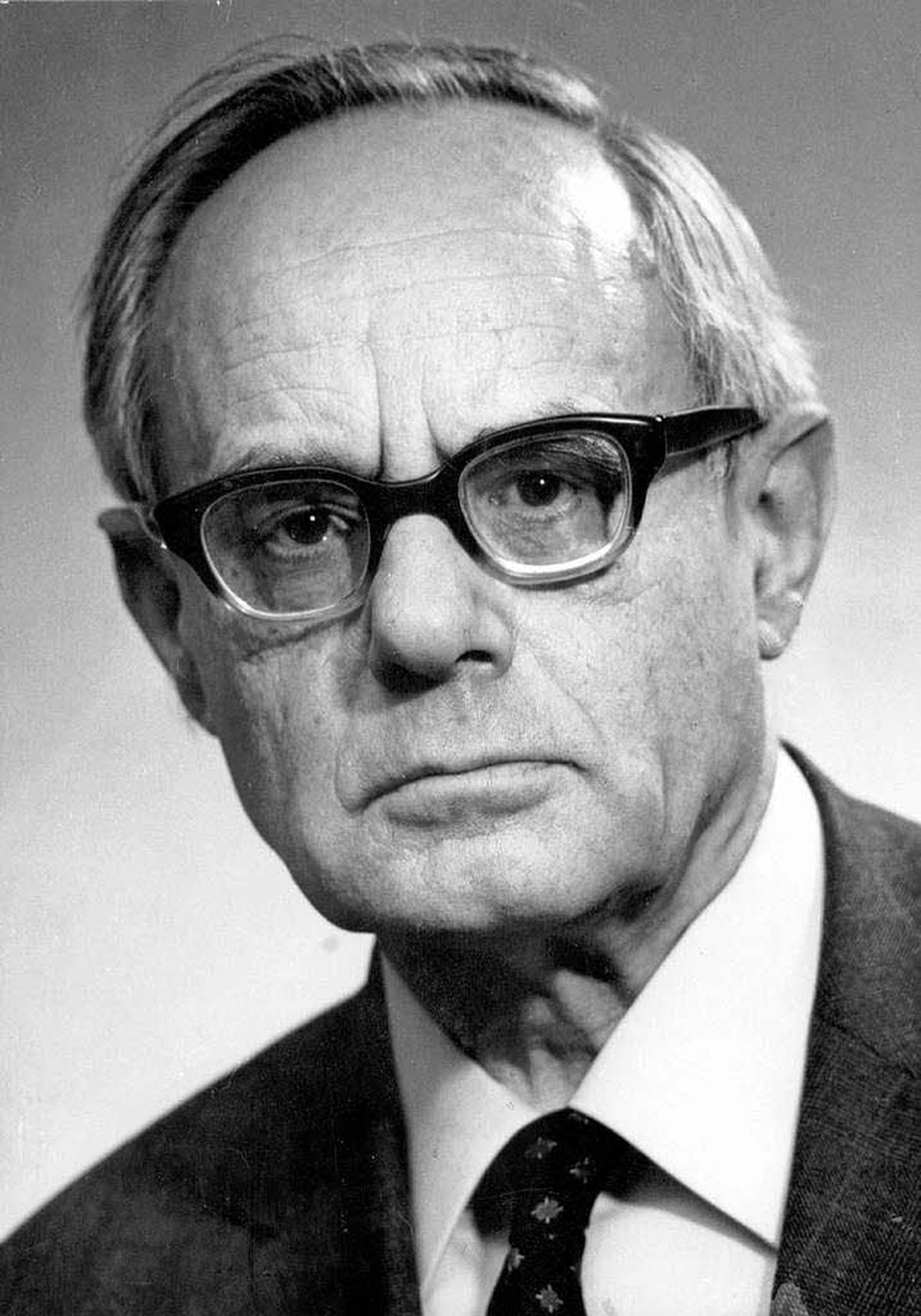
Karl Rahner
Karl Rahner (1904–1984) was one of the most influential Catholic theologians of the 20th century, whose profound and innovative contributions reshaped modern theology. Born in Freiburg, Germany, Rahner was a member of the Society of Jesus (Jesuits), joining the order in 1922. He pursued rigorous studies in philosophy and theology, earning his doctorate in theology at the University of Innsbruck.
Rahner's theological work is marked by his integration of traditional Catholic doctrine with contemporary philosophy, particularly existentialism and transcendental phenomenology. Deeply influenced by the ideas of Immanuel Kant and Martin Heidegger, Rahner explored how human experience, history, and culture intersect with divine revelation. His most notable work, Foundations of Christian Faith, presents a systematic theology centered on God’s self-communication to humanity and the concept of “the supernatural existential” — the inherent openness of humans to the divine.
One of Rahner’s key contributions was his development of the idea of the "anonymous Christian," which proposed that individuals who have not explicitly accepted Christianity may still experience salvation through God’s grace. This concept reflects his belief in the universality of God’s love and the inclusivity of salvation.
Rahner was also a key figure during the Second Vatican Council (1962–1965), where his theological insights shaped discussions on issues such as liturgical reform, ecumenism, and the Church's engagement with the modern world. His work continues to influence contemporary theology, particularly in the areas of Christology, ecclesiology, and sacramental theology.
A prolific author, Rahner wrote more than 4,000 articles and numerous books, earning him a global reputation as a scholar of extraordinary depth and vision. His legacy endures as a model of thoughtful engagement with faith, reason, and the complexities of human existence.