Julian of Norwich
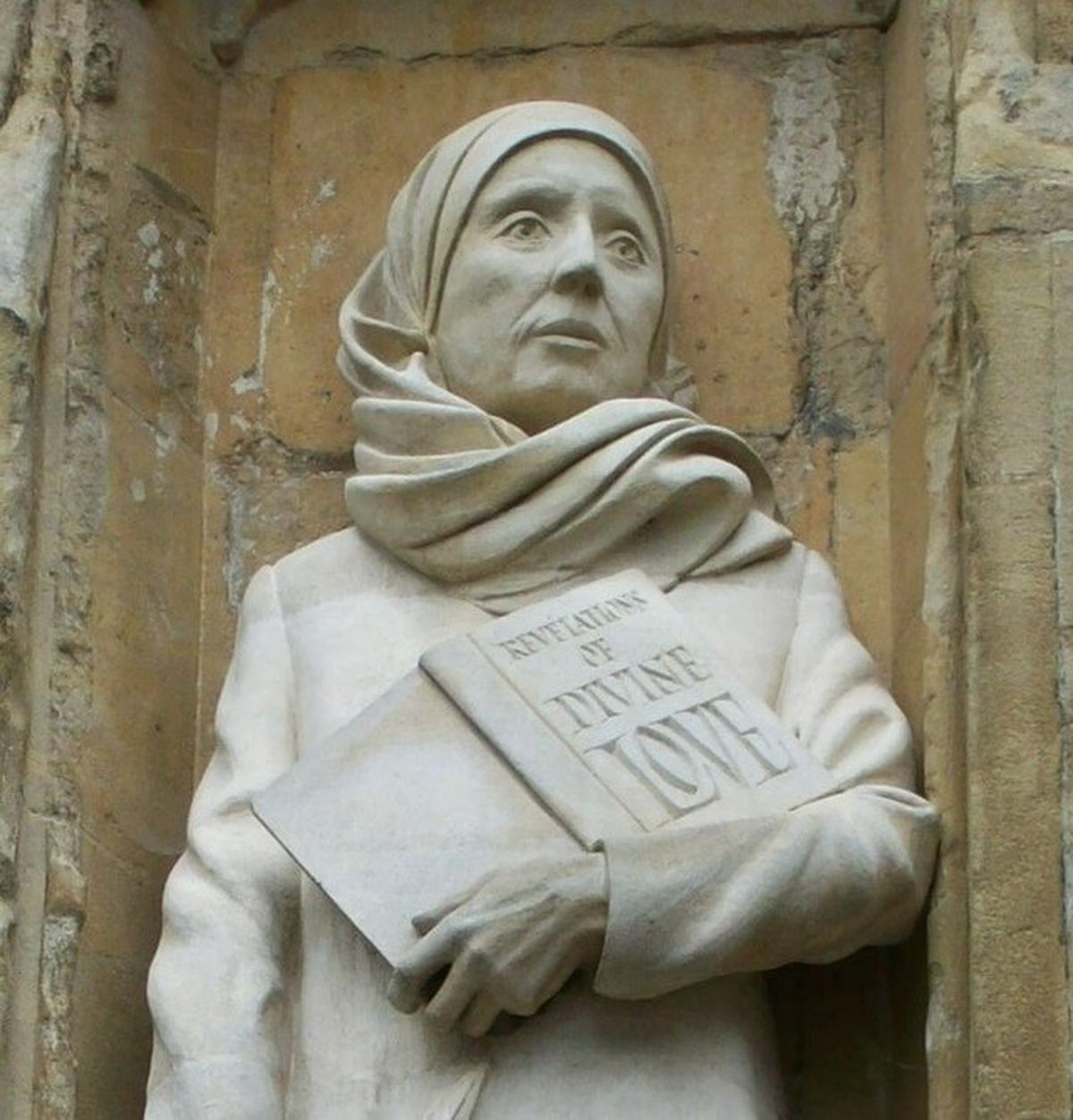
Julian of Norwich (1342–c.1416) was a 14th-century English mystic, theologian, and anchoress, known for her profound spiritual insights and for being the first woman to write a book in English, Revelations of Divine Love. Her work is regarded as one of the most important texts in Christian mystical literature, offering a vision of God’s love that is deeply hopeful, compassionate, and universal.
Little is known about Julian’s early life, including her birth name or family background, but she lived in Norwich, a thriving medieval city. At the age of 30, during a grave illness that nearly claimed her life, Julian experienced a series of 16 mystical visions, or “showings,” centered on Christ’s passion and God’s love. She spent the rest of her life reflecting on these visions, ultimately producing her celebrated theological work.
Julian lived as an anchoress in a small cell attached to St. Julian’s Church in Norwich, devoting her life to prayer, contemplation, and spiritual guidance for those who sought her wisdom. Despite the hardships of her time, including the Black Death, social upheaval, and religious conflict, her writings radiate a message of unshakeable hope. Her famous declaration, “All shall be well, and all shall be well, and all manner of things shall be well,” captures the heart of her theology: an unwavering trust in the goodness and mercy of God.
Julian’s reflections on the motherhood of God, the nature of sin and grace, and the boundless love of Christ continue to resonate deeply with readers today. Her work invites believers to see God not as distant or punitive, but as a source of infinite love and compassion. As a pioneering voice in Christian spirituality, Julian of Norwich remains a timeless witness to the transformative power of divine love.


![“In this little thing [a hazelnut] I](https://images.unsplash.com/photo-1475319122043-5ca9eeceefaf?ixid=M3w1NzU0OTZ8MHwxfHNlYXJjaHwxfHxnb2R8ZW58MHwwfHx8MTcxMjAyMDUzNXww&ixlib=rb-4.0.3&q=80&auto=compress&fit=crop&w=200&h=200)