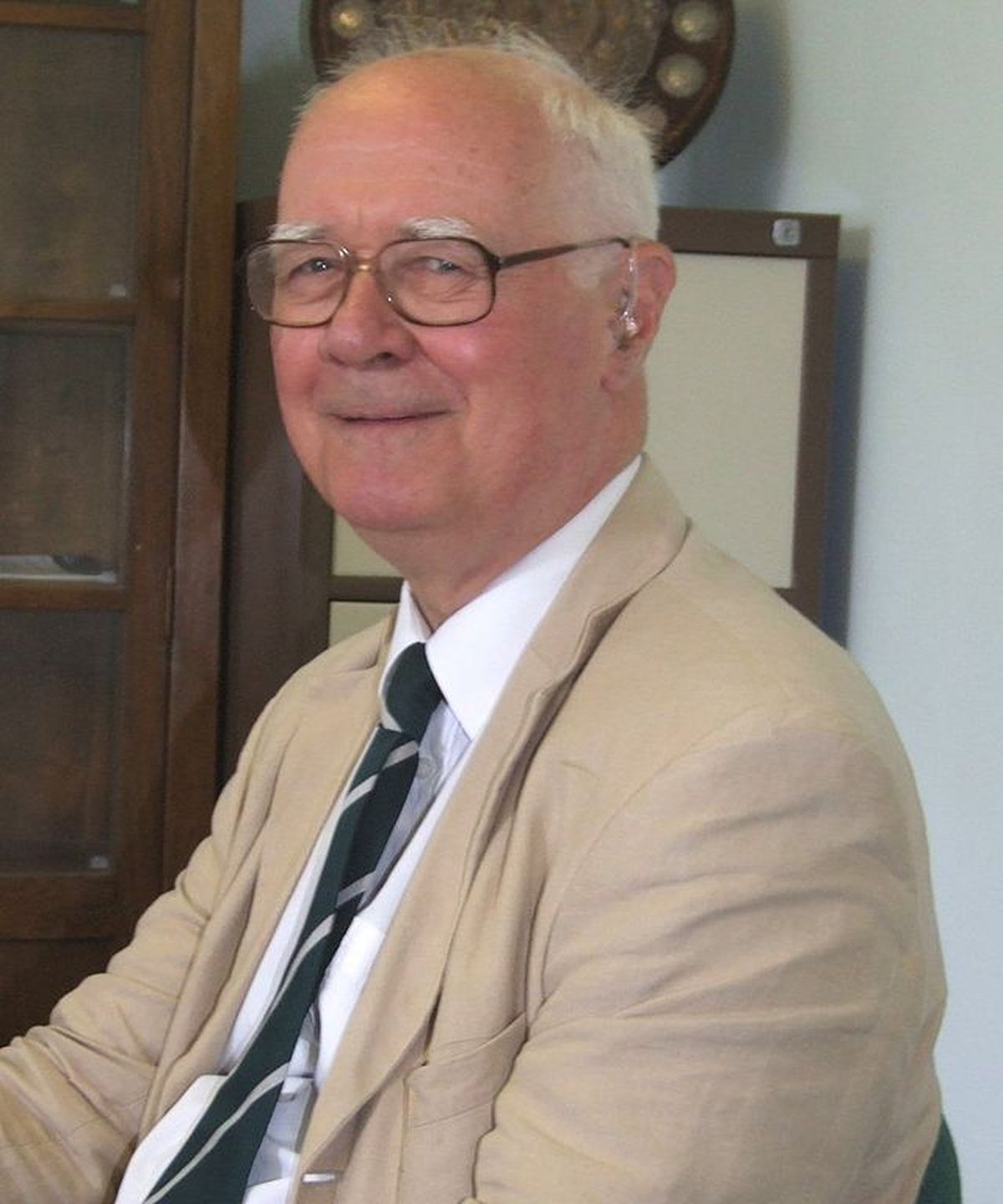
John Polkinghorne
John Polkinghorne (1930–2021) was a distinguished physicist, theologian, and Anglican priest who made profound contributions to both science and religion. Renowned for his ability to bridge the gap between these two disciplines, Polkinghorne’s work explored the harmony between faith and the natural sciences, inspiring scholars and laypeople alike.
Born in Weston-super-Mare, England, Polkinghorne studied mathematics at Trinity College, Cambridge, earning his PhD in quantum field theory. His groundbreaking research in theoretical physics, particularly in particle physics, gained him international recognition. He was a member of the team that discovered the quark, a fundamental particle of matter. In 1974, he was elected a Fellow of the Royal Society, one of the highest honors in the scientific community.
In 1979, Polkinghorne made the surprising decision to leave his esteemed scientific career to pursue ordained ministry in the Church of England. After completing theological studies, he was ordained as a priest and began a new chapter of his life, focusing on the relationship between science and faith.
Polkinghorne authored over 30 books, including The Way the World Is, Science and Theology, and Belief in God in an Age of Science. His works emphasized that science and religion address complementary aspects of reality, offering profound insights into the universe and humanity’s place within it. He advocated for the compatibility of scientific inquiry and Christian belief, encouraging dialogue rather than conflict between these fields.
Throughout his life, Polkinghorne received numerous accolades, including the Templeton Prize in 2002, recognizing his contributions to the dialogue between science and spirituality.
Polkinghorne’s legacy endures as a testament to the possibility of integrating rigorous scientific exploration with deep theological reflection. His life’s work continues to inspire those seeking a thoughtful and meaningful understanding of the cosmos and the divine.

