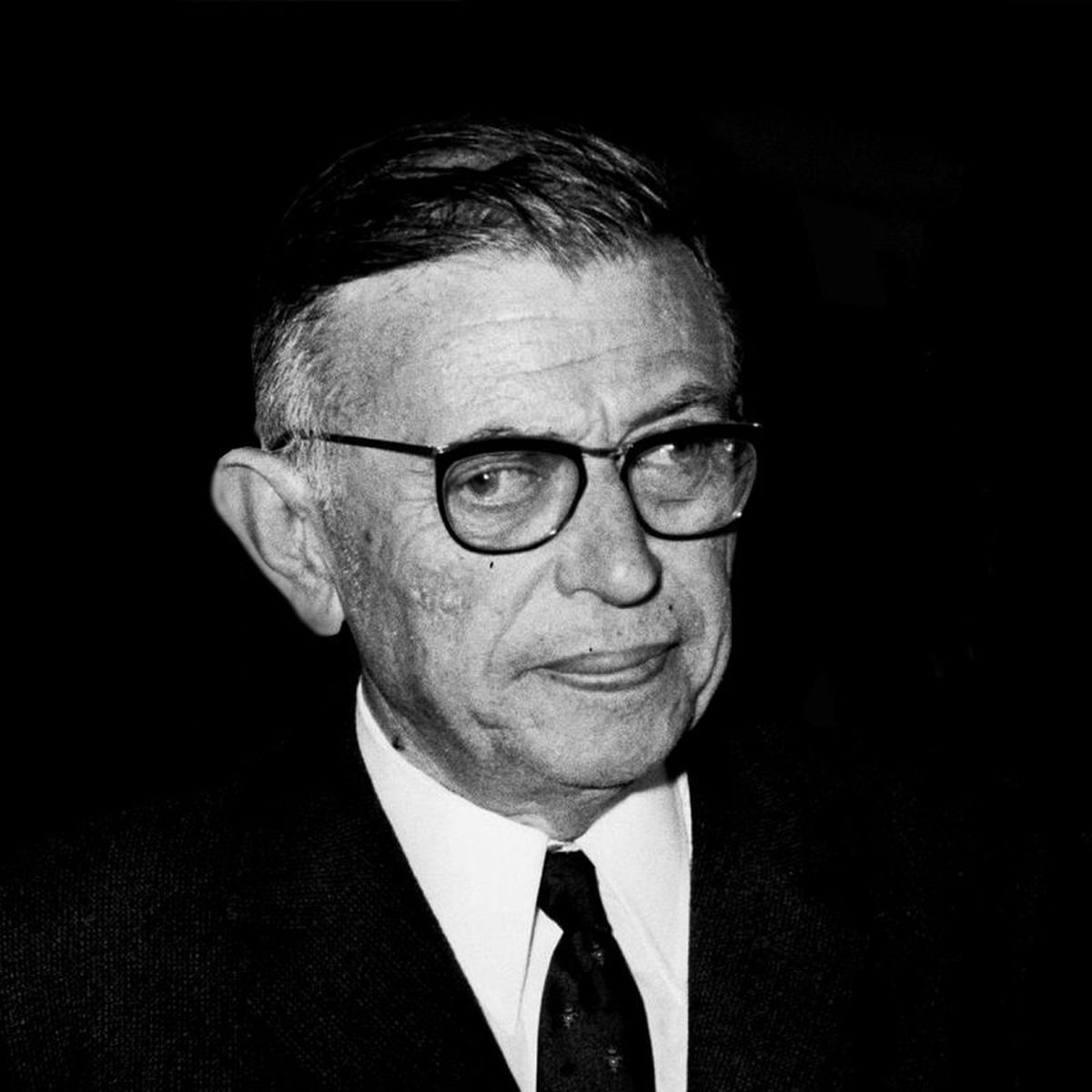
Jean-Paul Sartre
Jean-Paul Sartre (1905–1980) was a French philosopher, playwright, novelist, and political activist, widely regarded as one of the most influential intellectuals of the 20th century. As a leading figure in existentialism and phenomenology, Sartre’s work explored themes of freedom, responsibility, and the human condition, leaving an indelible mark on philosophy, literature, and political thought.
Born in Paris, Sartre showed an early aptitude for writing and critical thinking. He studied at the École Normale Supérieure, where he immersed himself in philosophy, particularly the works of Immanuel Kant, Friedrich Nietzsche, and Martin Heidegger. Sartre’s experiences as a soldier and prisoner of war during World War II profoundly shaped his worldview, leading him to embrace existentialism as a framework for understanding human existence.
Sartre’s groundbreaking philosophical work, Being and Nothingness (1943), articulated his belief in radical human freedom and the responsibility it entails. He argued that existence precedes essence, meaning that individuals create their own meaning and identity through their choices and actions. This concept became a cornerstone of existentialist philosophy.
In addition to philosophy, Sartre was a prolific writer of novels, plays, and essays. His works, such as Nausea, No Exit, and The Flies, explored existentialist themes through vivid storytelling and compelling characters. He was awarded the Nobel Prize in Literature in 1964 but famously declined it, asserting that writers should remain independent of institutional accolades.
A committed political activist, Sartre was deeply engaged with Marxism and supported various liberation movements. His writings often addressed issues of oppression, colonialism, and social justice.
Sartre’s lifelong partnership with philosopher Simone de Beauvoir also defined his intellectual and personal life. Together, they challenged conventional norms and championed ideas that continue to resonate in contemporary thought. Sartre’s legacy endures as a symbol of intellectual courage and the quest for authentic existence.