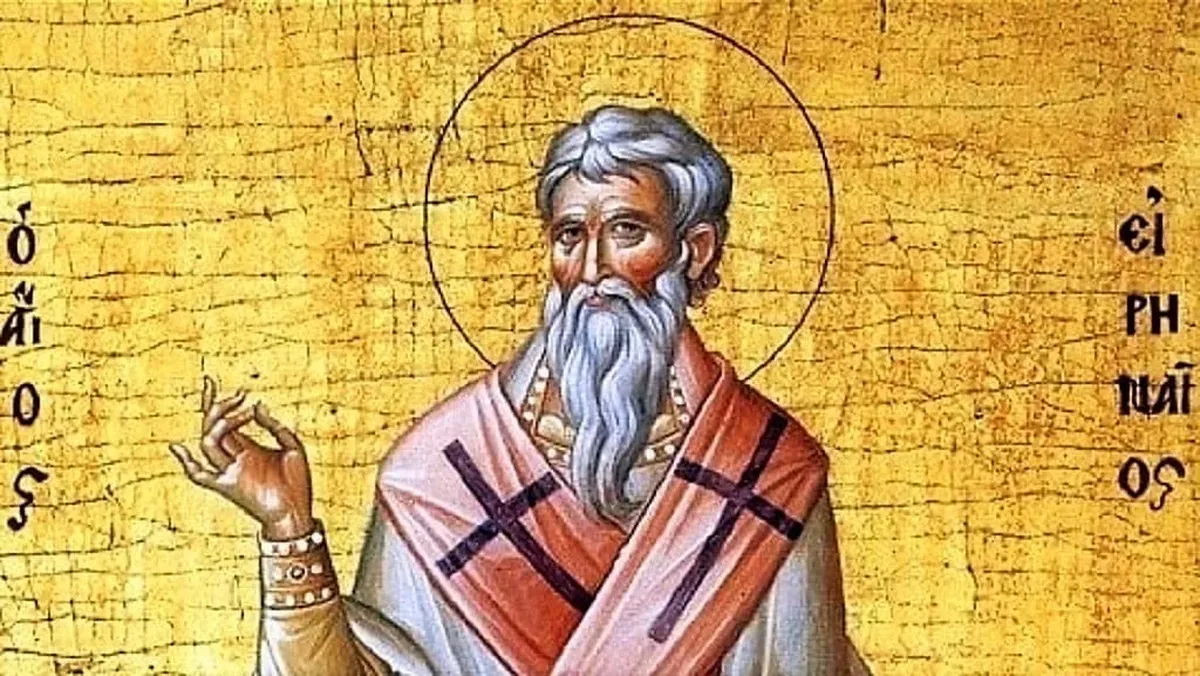
Irenaeus of Lyons
Irenaeus of Lyons (c. 130–202 AD) was an early Christian theologian and bishop, best known for his defense of orthodox Christianity against heresies in the second century. Born in Smyrna (modern-day Izmir, Turkey), Irenaeus was a disciple of Polycarp, who himself was a student of the apostle John. Irenaeus became the bishop of Lyons in Gaul (modern-day France), where he wrote extensively to address the growing influence of Gnostic teachings that threatened the early Christian community.
Irenaeus's most significant contribution to Christian theology is his work Against Heresies (Adversus Haereses), where he vigorously opposed the Gnostic sects, particularly the Valentinians, who promoted a dualistic and speculative interpretation of Christian doctrine. Irenaeus argued that the true Christian faith is rooted in the teachings of the apostles, which he believed were faithfully preserved through the Church. He emphasized the importance of Scripture, the rule of faith, and the apostolic tradition as safeguards against false teachings.
In addition to his theological writings, Irenaeus is also known for developing the concept of salvation history, emphasizing the unity of God's plan for creation and redemption. He argued that God’s creation and salvation were intrinsically linked, and that Christ’s incarnation, death, and resurrection restored humanity and the created world. Irenaeus is one of the first theologians to articulate a coherent understanding of the significance of Christ's role in the divine economy of salvation.
Irenaeus also contributed to the early development of Christian doctrine, especially in relation to the nature of God, the Trinity, and the unity of the Old and New Testaments. His work had a profound impact on the shaping of Christian orthodoxy and the formation of Christian theology in the centuries that followed, and he is recognized as one of the most important early Church Fathers.