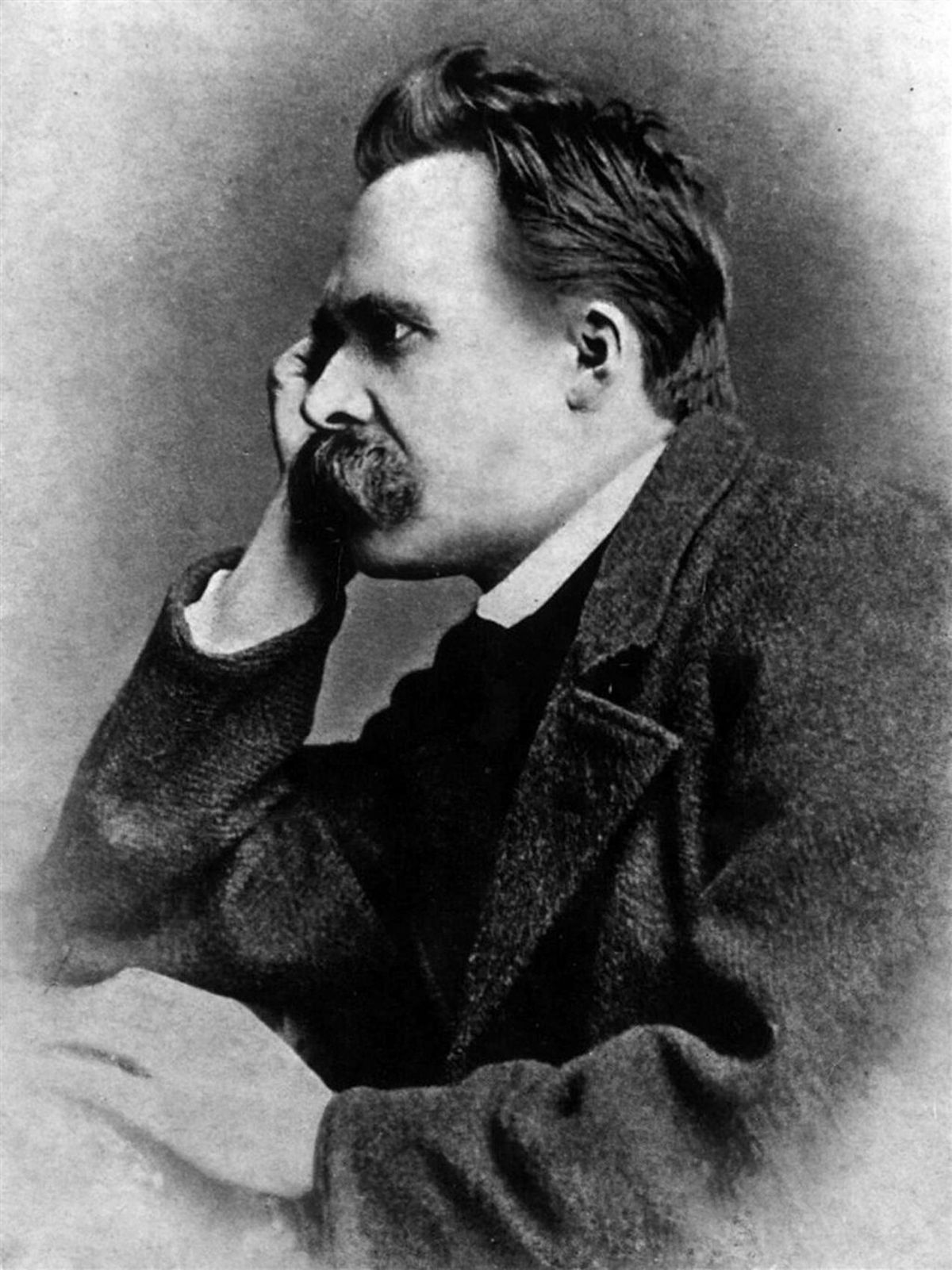
Friedrich Nietzsche
Friedrich Wilhelm Nietzsche (1844–1900).
Friedrich Nietzsche was a German classical scholar and philosopher. A brilliant scholar, he was one of the most influential philosophers of the 19th century. He was notorious for his frequent association with Nazism and his claim that "God is dead." Both are subject to some misunderstanding.
Nietzsche was born October 15, 1844 in Röcken, then in Prussia, today in modern Germany. Nietzsche was a pastor's kid, with his father (as well as grandfathers) serving as a Lutheran pastor. During his education at Leipzig, he began studying the philosophy of Arthur Schopenhaur and met the famous composer Richard Wagner. At only 25, his recognized brilliance in classical studies had him appointed to a professorship in Basel, even without a completed dissertation or doctorate.
His most famous work considered the consequences of “the death of God,” the idea that science and secularism had destroyed the basis of morality. He proposed a story according to which Judeo-Christian moral teachings had developed as a response to the powerful, elevating the weak, the “slave,” over their more powerful masters. On his views, once one realizes the metaphysical and historical bankruptcy of theological and philosophical morality, one is left with purposelessness and meaninglessness. He saw the nationalism that would come to dominate the first half of the 20th century as a response to this meaninglessness, substituting the state for God. The nihilism that results from the collapse of morality posed one of the great problems of his career.
Nietzsche’s association with fascism and Nazism in particular is largely owing to the efforts of his sister, whose curation (and even forgery) of his papers resulted in her own anti-Semitism influencing how Nietzsche was understood. The Nazis and other fascists looked to this version of Nietzsche for intellectual justification.
Illnesses contracted during service in the Franco-Prussian war in 1870 marked the beginning of a decline in Nietzsche’s health from which he would never recover. Following a collapse in 1889, he stayed in asylums or under his sister’s care. He died in 1900.