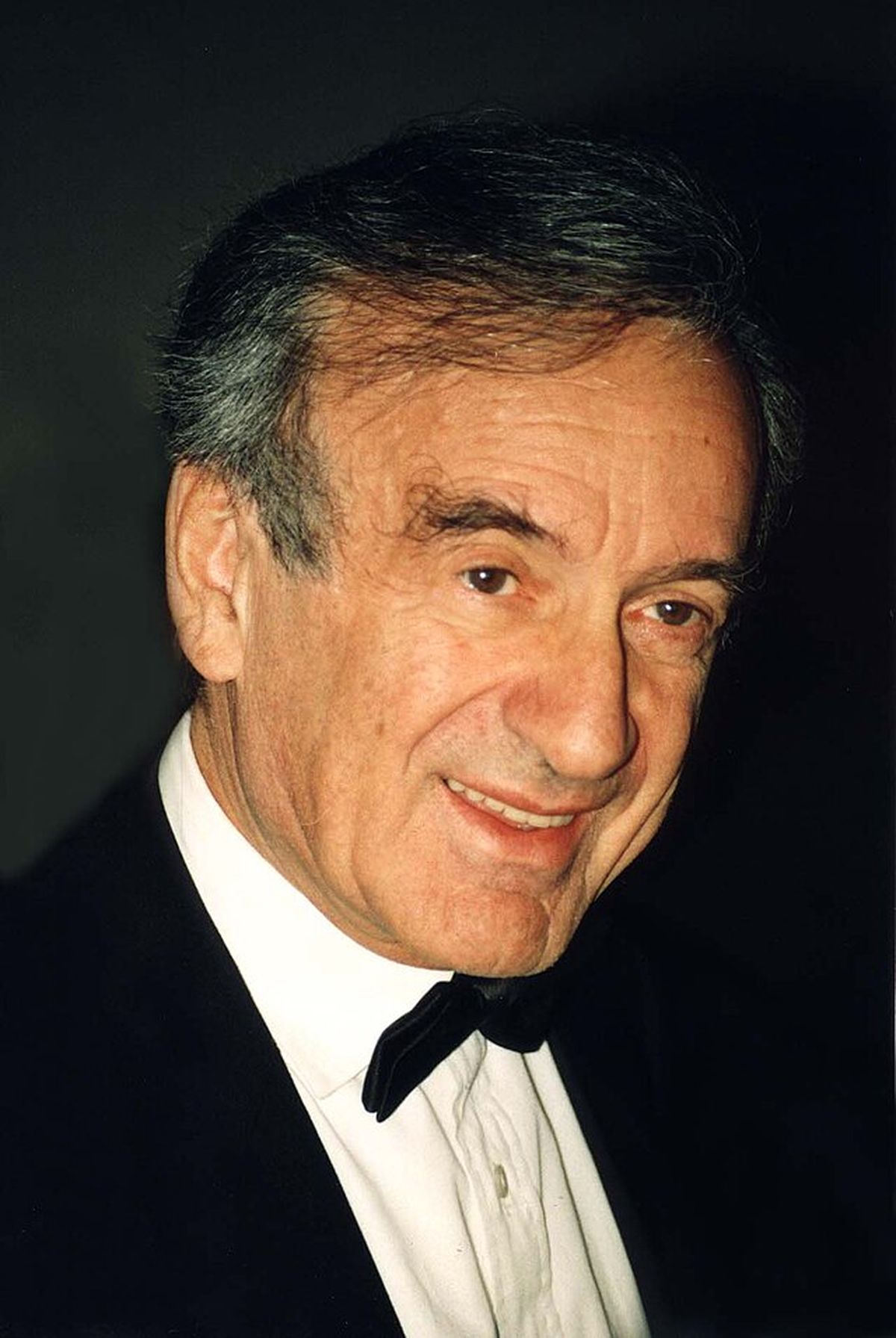
Elie Wiesel
Elie Wiesel (1928–2016) was a Nobel Laureate, author, professor, and human rights advocate whose life and work profoundly shaped global understanding of the Holocaust and the importance of memory and justice. Born in Sighet, Romania, Wiesel grew up in a close-knit Jewish community. In 1944, his family was deported to Auschwitz, where his mother and younger sister perished. He and his father were later transferred to Buchenwald, where his father died shortly before liberation in 1945.
Wiesel’s experiences during the Holocaust became the foundation of his lifelong commitment to ensuring the atrocities were neither forgotten nor repeated. His memoir, Night, recounts his harrowing time in the concentration camps and has become one of the most widely read and impactful accounts of the Holocaust, translated into over 30 languages.
After the war, Wiesel pursued journalism, writing for French and Israeli publications. In 1956, he moved to the United States and began a prolific career as a writer and lecturer. Over his lifetime, he authored more than 50 books, many exploring themes of faith, suffering, and the resilience of the human spirit.
In 1986, Wiesel was awarded the Nobel Peace Prize for his unwavering commitment to human rights and his efforts to prevent future genocides. The Nobel Committee hailed him as a "messenger to mankind," emphasizing his dedication to the cause of peace and justice.
Wiesel also served as a professor at Boston University, where he was the Andrew W. Mellon Professor in the Humanities. His advocacy extended beyond the Holocaust, as he spoke out against injustices worldwide, including apartheid in South Africa, the Armenian Genocide, and the crisis in Darfur.
Elie Wiesel’s legacy endures as a beacon of hope, memory, and moral courage, reminding the world of the vital importance of confronting hate and upholding human dignity.


