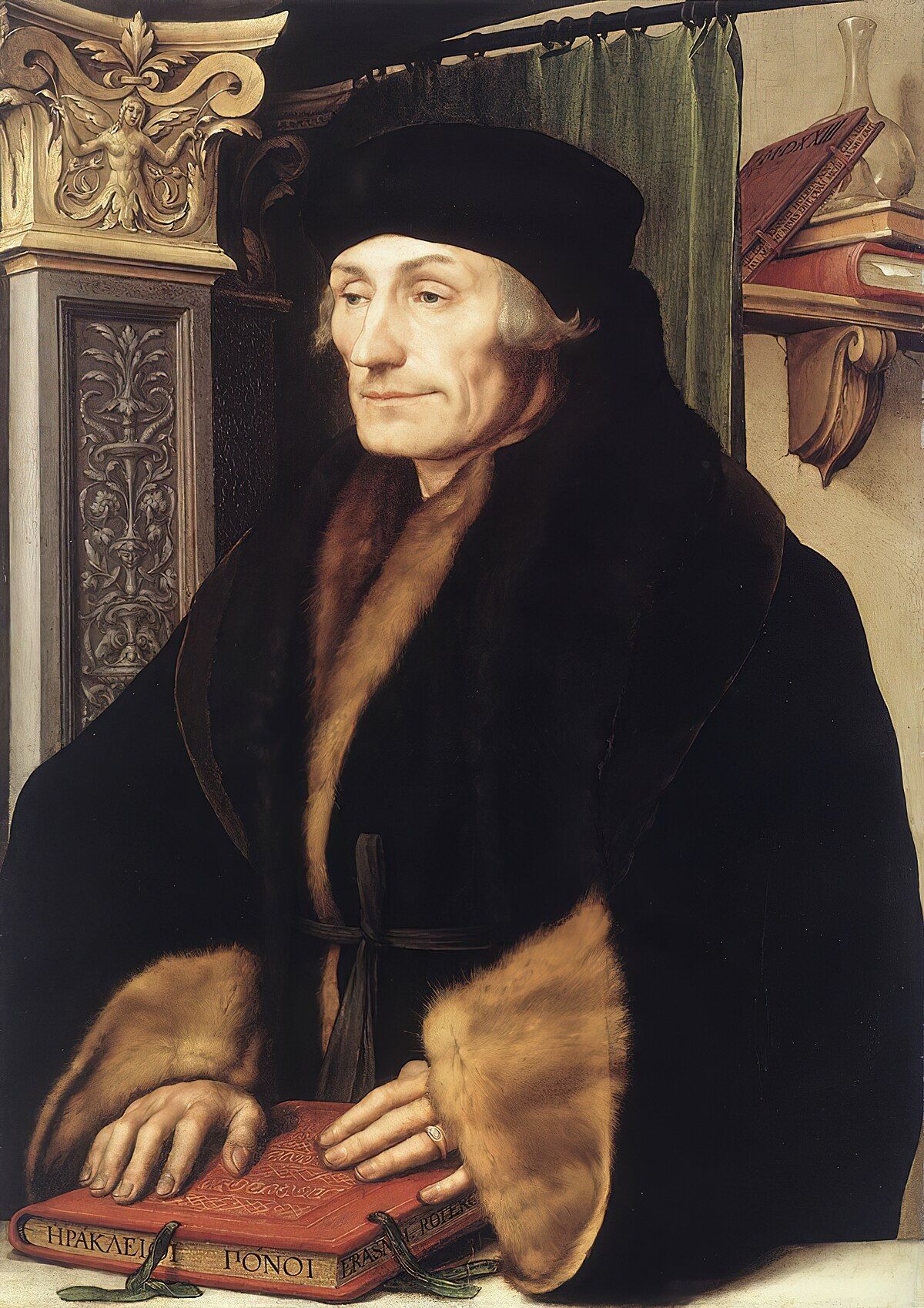
Desiderius Erasmus
Desiderius Erasmus (1466–1536) was a Dutch scholar, theologian, and humanist whose writings and ideas profoundly influenced the Renaissance and Reformation. Born in Rotterdam, Netherlands, Erasmus was the illegitimate son of a Catholic priest and received an education at monastic schools, where he developed an early passion for classical literature and theology.
Erasmus became one of the leading figures of the Northern Renaissance, advocating for a return to the original sources of Christian teaching, particularly the Bible. He was a pioneer of textual scholarship, producing a critical edition of the Greek New Testament in 1516, accompanied by a Latin translation, which laid the groundwork for future biblical studies and was widely influential during the Reformation.
A prolific writer, Erasmus authored numerous works on theology, education, and social reform. His satirical masterpiece, In Praise of Folly (1509), criticized the corruption and hypocrisy within the Church and society while calling for moral and spiritual renewal. Despite his critiques, Erasmus remained committed to reforming the Church from within, avoiding alignment with Martin Luther and the Protestant Reformation, which he felt was too radical.
Erasmus championed humanist ideals, emphasizing reason, education, and the study of classical antiquity as means to cultivate virtue and wisdom. His works advocated for tolerance, peace, and the rejection of dogmatism, earning him admiration as "the prince of the humanists."
Though often embroiled in controversy, Erasmus's legacy endures as a bridge between medieval scholasticism and modern humanist thought. His contributions to theology, biblical scholarship, and intellectual life shaped the course of European history. Erasmus died on July 12, 1536, in Basel, Switzerland, leaving behind a body of work that continues to inspire scholars, theologians, and advocates of reform and reason.