Cormac McCarthy
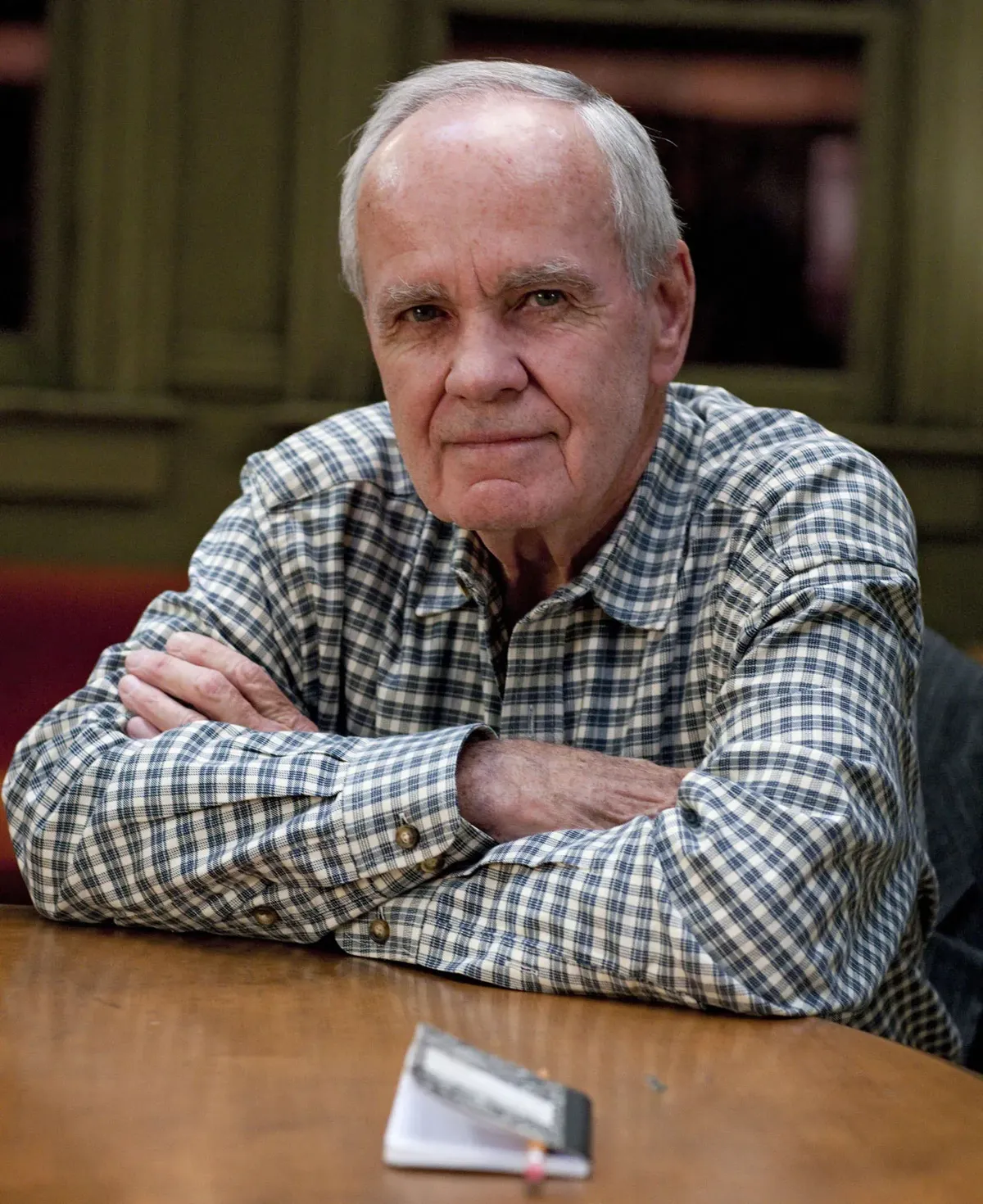
Cormac McCarthy (1933–2023) was a celebrated American novelist, playwright, and screenwriter, widely regarded as one of the most significant literary voices of the 20th and early 21st centuries. Known for his sparse, poetic prose and exploration of themes like violence, survival, morality, and the human condition, McCarthy’s work has left an indelible mark on literature and culture.
Born Charles McCarthy Jr. in Providence, Rhode Island, McCarthy grew up in Knoxville, Tennessee, where his deep connection to the American South began. He attended the University of Tennessee before leaving to pursue his writing career. Over the course of his life, McCarthy published twelve novels, spanning genres and settings, from the Appalachians to the deserts of the American Southwest.
His early works, such as The Orchard Keeper (1965) and Child of God (1973), established his reputation for unflinching narratives and richly drawn characters. McCarthy achieved wider acclaim with his Border Trilogy—All the Pretty Horses (1992), The Crossing (1994), and Cities of the Plain (1998)—which captures the rugged beauty and brutality of the American West.
McCarthy’s later works solidified his status as a literary titan. Blood Meridian (1985) is considered his magnum opus, a haunting tale of violence on the Texas-Mexico border. The Road (2006), a post-apocalyptic masterpiece, won the Pulitzer Prize for Fiction and was adapted into a successful film.
Renowned for his aversion to publicity, McCarthy preferred a private life, dedicating himself to his craft. He spent much of his later years writing and engaging with scientific and philosophical inquiries, including his work at the Santa Fe Institute.
McCarthy’s influence on literature and culture is profound, with his stark, lyrical storytelling inspiring countless readers and writers to grapple with the deepest questions of existence.