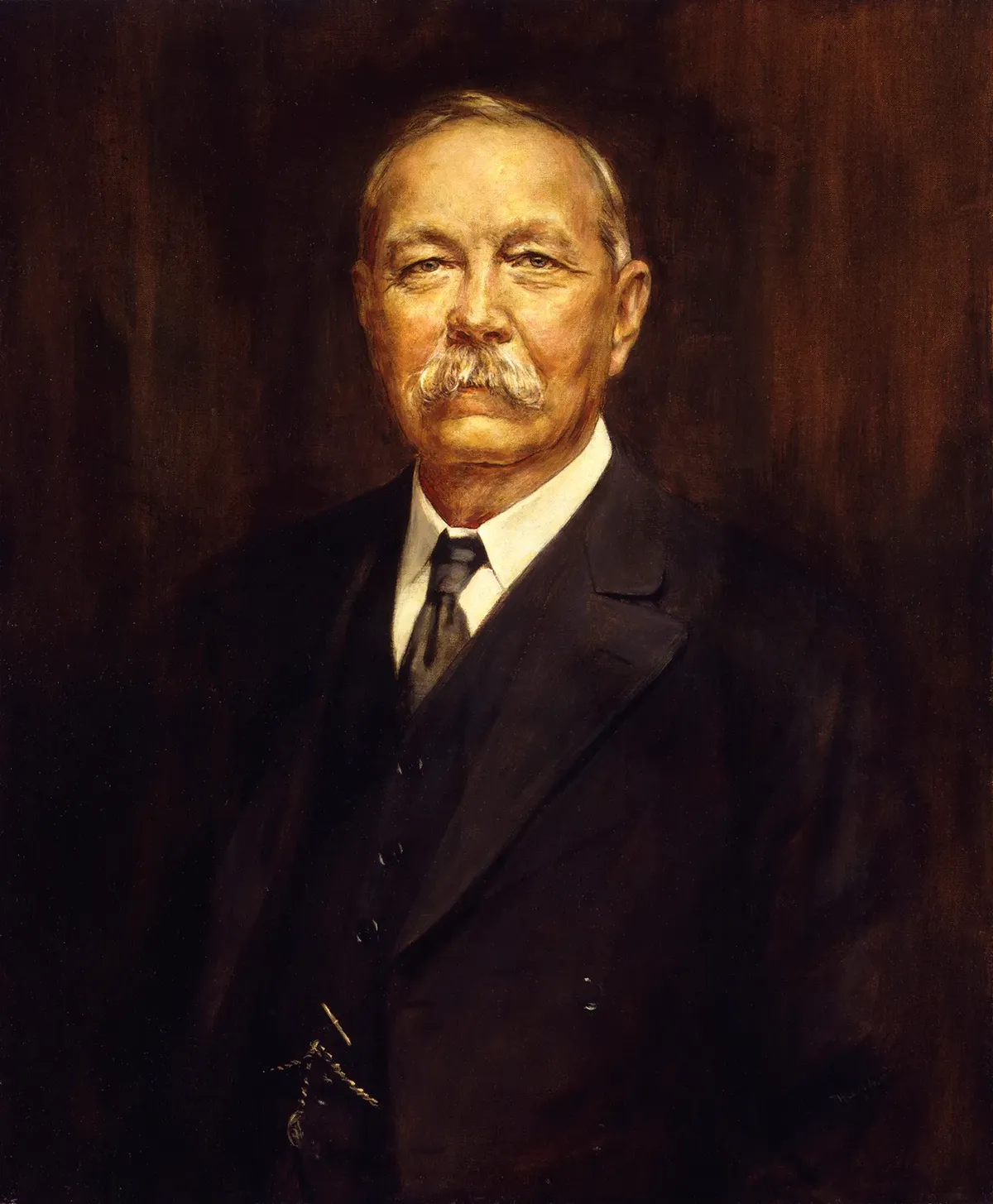
Arthur Conan Doyle
Sir Arthur Conan Doyle (1859–1930) was a British writer, best known for creating the iconic detective Sherlock Holmes, one of the most famous and enduring characters in literary history. Born in Edinburgh, Scotland, Doyle studied medicine at the University of Edinburgh Medical School and initially worked as a doctor. His early medical career, however, did not flourish, and he turned to writing, initially publishing short stories and novels across various genres, including historical fiction and science fiction.
In 1887, Doyle introduced the character of Sherlock Holmes in A Study in Scarlet, a groundbreaking detective novel that revolutionized the mystery genre. Holmes, with his brilliant deductive reasoning, keen observation skills, and iconic sidekick, Dr. Watson, quickly captured the public’s imagination. Doyle went on to write three more novels and fifty-six short stories featuring Holmes, solidifying the detective’s place in literary history.
Despite his success with Holmes, Doyle sought to distance himself from the character later in life. In 1893, he famously "killed off" Holmes in The Final Problem, but public outcry led him to eventually resurrect the detective in 1903. Doyle's other works include historical novels like The White Company and The Adventures of Brigadier Gerard, as well as works on spiritualism, a subject he became deeply interested in after the death of his son.
Doyle was knighted in 1902 for his contributions to literature and his work in promoting the British Empire during the Boer War. Beyond his writing, he was a passionate advocate for various social and political causes, including the rights of the underprivileged and the abolition of capital punishment.
Sir Arthur Conan Doyle passed away in 1930, leaving behind a legacy as a master storyteller whose Sherlock Holmes stories continue to captivate readers and inspire adaptations across multiple media.


