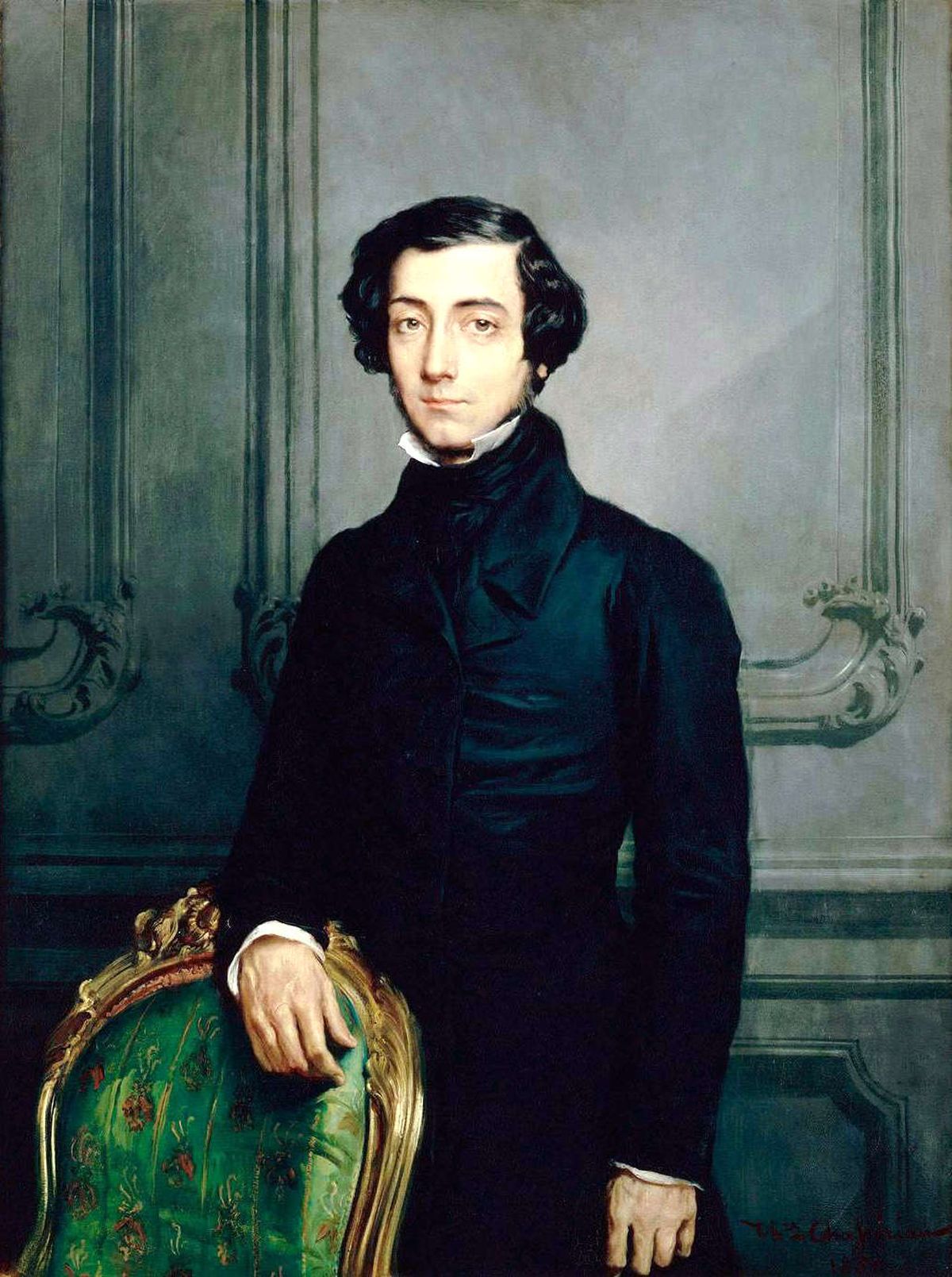
Alexis de Tocqueville
Alexis de Tocqueville (1805–1859) was a French political thinker, historian, and diplomat best known for his seminal work Democracy in America, which analyzes the democratic system of the United States and its implications for the future of politics and society. Born into an aristocratic family in France, Tocqueville was deeply influenced by the events of the French Revolution and the changing political landscape of Europe. His observations and writings were driven by a concern for the principles of liberty, equality, and the effects of democracy on social and political institutions.
Tocqueville’s most famous work, Democracy in America, was based on his travels to the United States in the early 1830s. He sought to understand how a democracy could flourish in a large and diverse country, and how democratic principles impacted political, social, and cultural life. His analysis is notable for its balance of admiration and criticism, as he lauded American democracy for its emphasis on individual liberty, equality, and self-government, but also warned of the dangers of majority rule, the erosion of individual freedoms, and the rise of materialism.
Throughout his career, Tocqueville was a strong advocate for political and social reform, believing that democracy could be the foundation of a just and prosperous society, but that it required a careful balance to prevent tyranny of the majority. He also explored themes of civil society, political participation, and the relationship between religion and democracy.
In addition to Democracy in America, Tocqueville wrote The Old Regime and the Revolution, in which he analyzed the causes and consequences of the French Revolution. His work continues to be studied for its profound insights into the nature of democracy, the complexities of political freedom, and the role of civil society in shaping democratic governance.


