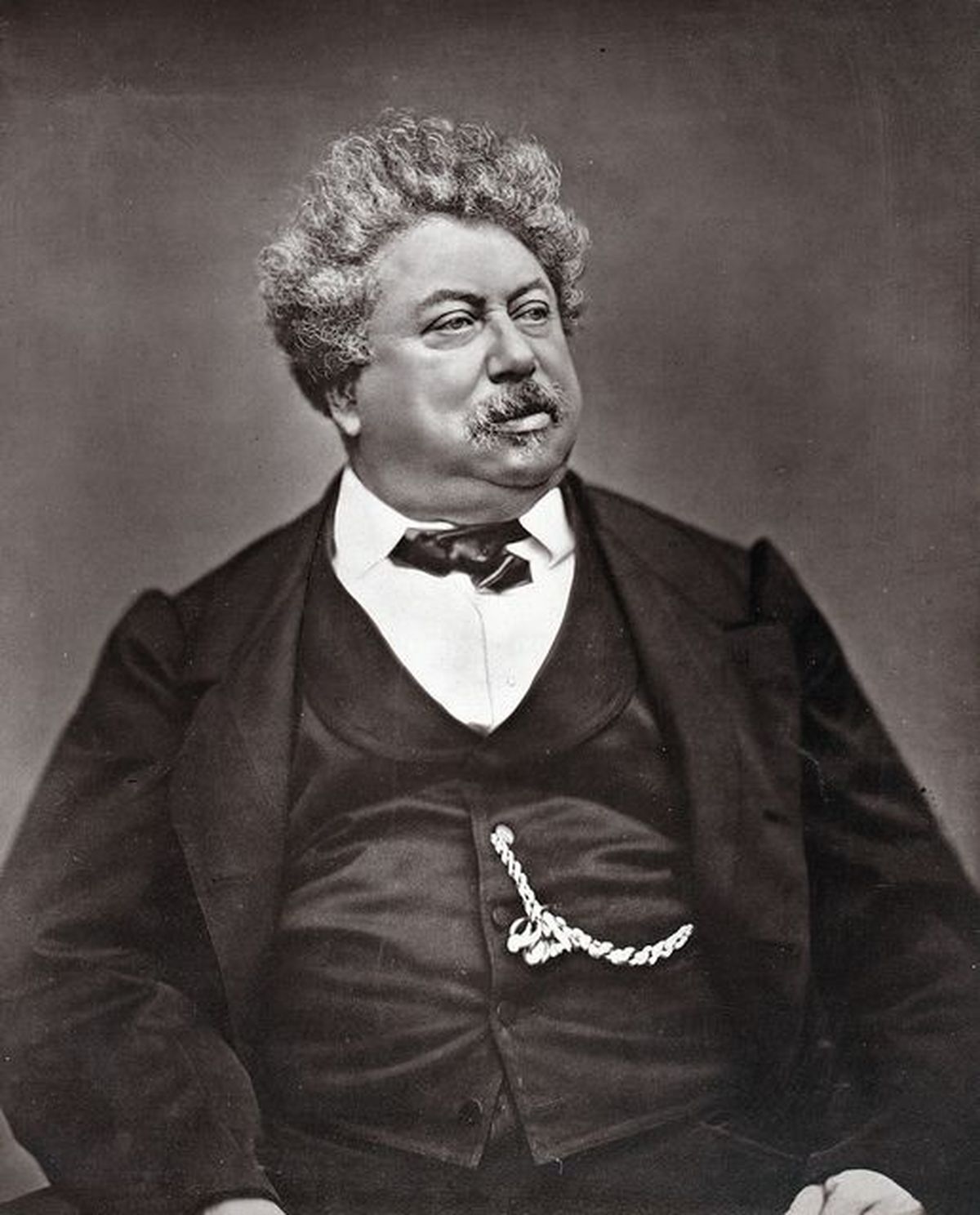
Alexandre Dumas
Alexandre Dumas (1802–1870) was a celebrated French novelist, playwright, and journalist, renowned for his captivating adventure stories and historical novels. His works are among the most widely read in the world, and his influence on literature remains profound. Born in Villers-Cotterêts, France, Dumas was the son of Thomas-Alexandre Dumas, a French general of Haitian descent, and Marie-Louise Élisabeth Labouret. His mixed-race heritage played a significant role in shaping his perspectives and experiences.
Dumas first gained fame as a playwright, with successful plays like Henri III et sa cour (1829) and Christine (1830). However, it was his novels that cemented his legacy. His most famous works include The Three Musketeers (1844), Twenty Years After (1845), The Count of Monte Cristo (1844–1845), and The Man in the Iron Mask (1850). These stories, filled with intrigue, heroism, and vivid characters, captured the imagination of readers worldwide.
Known for his prolific output, Dumas employed a team of collaborators, including ghostwriters, to produce a vast body of work. Despite criticism for this practice, his storytelling genius and ability to create unforgettable narratives remain undisputed.
Dumas lived a colorful life, marked by periods of wealth, extravagance, and financial difficulty. He traveled extensively, drawing inspiration from his adventures, and engaged in political and social causes, including advocating for racial equality.
In addition to his fiction, Dumas wrote memoirs, travel books, and essays, showcasing his versatility as a writer. He was also a gastronome, authoring a comprehensive culinary dictionary.
Dumas died in 1870, leaving a literary legacy that continues to enchant readers. His works have been translated into numerous languages and adapted into countless films, plays, and television series, ensuring his enduring impact on global culture.


