worship guide
Maundy Thursday Worship Resources
Planning your Maundy Thursday service for April 2, 2026? Find sermon guides for John 13 and the Last Supper, a complete order of service, and practical guidance on foot washing and the stripping of the altar.
Updated for Maundy Thursday 2026
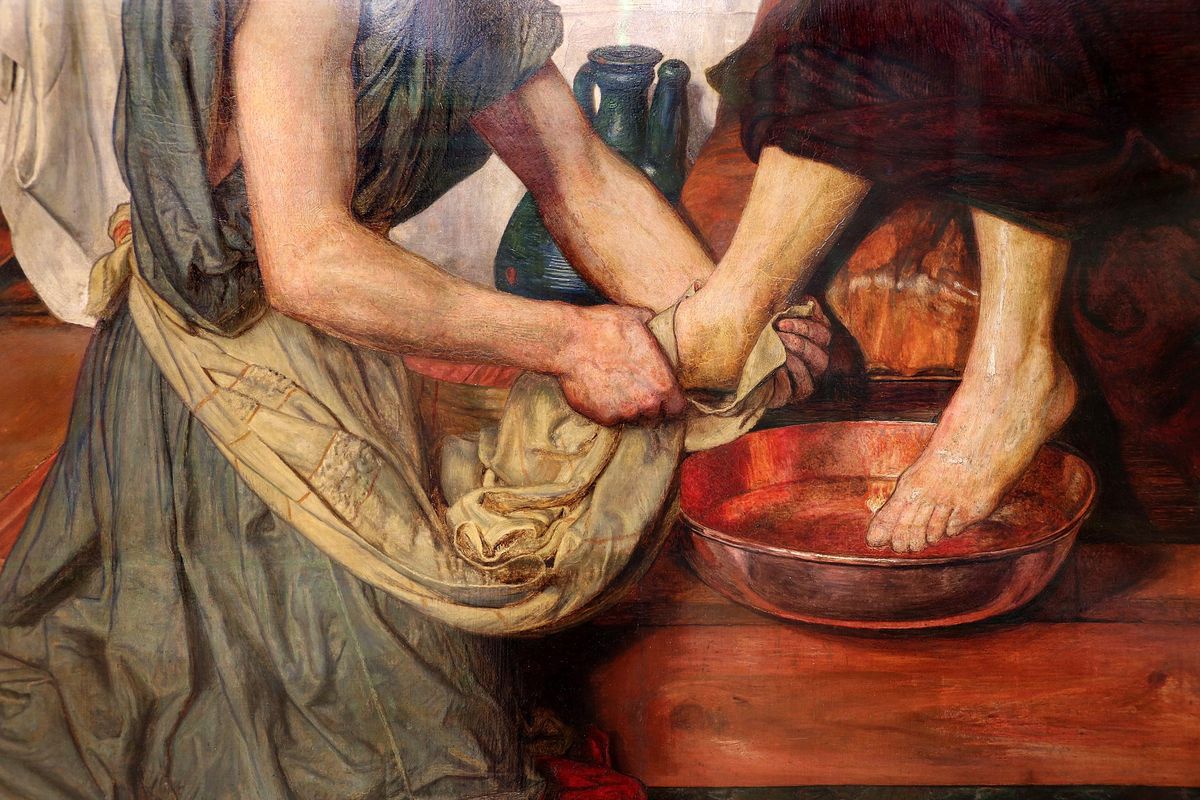
Maundy Thursday declares that the Jesus way is different. The Rabbi, the one they call "master," the Messiah, the Son of David, the King of the Jews — the Son of God kneels with a bowl of water and dirties himself with his follower's feet. When he says,
It shall not be so among you,
he means it.
It is a sacred night. It forms the core of the church to come: how leadership is to work, the command to love one another, and establishes the meal that unites Christians across the world and history.
This is a night worth getting right. This guide brings together TPW's sermon and liturgy resources for Maundy Thursday (April 2, 2026), including scripture guides and sermon resources for preaching on the Last Supper, a complete order of service, liturgy by type and theme, and practical guidance on foot washing and the stripping of the altar.
Use the links below to find resources quickly. This page includes both free and premium resources. If you aren't a subscriber yet, consider a 14-day free trial to see how TPW can help your ministry.
Preaching Guides for Maundy Thursday
Lectionary Guides include preaching commentary, illustrations, quotes, and liturgy (Complete Package subscribers). Scripture Guides offer the same sermon content without liturgy (Essentials subscribers).
John 13:1-17, 31b-35 | God Stoops to Wash Human Feet
Away from the crowds, Jesus shares an intimate moment with his disciples in which he teaches them an unforgettable lesson on love. What does it mean to follow his example?
John 13:1-17, 31b-35 | They Will Know You Are My Disciples
Paul Koptak uses his index, identification, and intertext approach to explore the love expressed in foot washing and communion.
Exodus 12:1-14 | Layers of Remembrance
We read the story of Passover on Maundy Thursday because the context of Passover is essential to the remembrance that Jesus urges his disciples to. What does Passover mean to the Christian?
Psalm 116:1-2, 12-19 | A Song for Passover
Paul Koptak uses his index, identification, and intertext approach to unearth connections between this psalm of thanks and other Maundy Thursday readings.
Maundy Thursday Sermon Ideas
Need a fresh angle for your Maundy Thursday sermon? These reflections on the blog from ministry experts explore themes like servanthood, sacraments, and unity preaching angles for your own Maundy Thursday sermons. View free on the TPW blog.
A New Commandment — A reflection for Maundy Thursday on the new order that Jesus brings on Maundy Thursday, turning the social strata upside-down.
Communion in a Hostile World — A short meditation on the sacrament of communion in a world where union is harder to find than ever. Yet we are told to be one, just as Jesus and the Father are. How does your community create a space that kind of unity?
Truth We Can Touch — A review of Tim Chester's book on the sacraments that shares insights and illustrations for teaching on the sacraments.
Maundy Thursday Worship Service
Maundy Thursday services tend to focus on the humility Jesus showed in washing of the disciples' feet and the institution of the Lord's Supper. For a discussion of some of the liturgical options, see this blog post.
We offer a prayerful and solemn Maundy Thursday liturgy that focuses on the institution of the Lord's Supper and has instructions for observing the tradition of removing ornaments from the altar. Adapted from Trinity Lutheran Church, Lisle, Illinois.
Requires Complete Package subscription.
Maundy Thursday Liturgy by Type
Find Sermon and Liturgy Resources by Theme
Sermon resources accessible to all paid subscribers. Liturgy requires Complete Package subscription.
Maundy Thursday Frequently Asked Questions
Maundy Thursday's Lectionary readings do not vary by cycle. The texts are
Exodus 12:1-4, (5-10), 11-14
Psalm 116:1-2, 12-19
1 Corinthians 11:23-26
John 13:1-17, 31b-35
See our scripture and lectionary guides for Maundy Thursday.
Maundy Thursday (also called Holy Thursday) takes its name from the Latin version of John 13:34: "A new commandment I give to you, that you love one another: just as I have loved you, you also are to love one another" (ESV). Over the centuries, English speakers turned mandatum (commandment) into "maundy."
But, whatever we call the Thursday of Holy Week, the emphasis on that command to love remains central. That teaching of radical self-lowering love is exemplified by his radical action of washing his disciples' feet.
Foot washing services are powerful and memorable. It reenacts Jesus' actions on the night of the Last Supper and following his command to the disciples to wash each other's feet (John 13:14).
Part of the power of this sort of ritual is that not only is there humility in washing another person's feet, but it is an exercise of trust to allow one's feet to be washed by someone else.
These services do require a little preparation and need to have time budgeted accordingly.
Here are some options:
Representative feet: arrange with a group of people who represent the congregation to have their feet washed. This could be as few as two (oldest and youngest members?) or a selection that is meant to represent the diversity of your congregation. 12 is a nice number (it is the practice at the Vatican). Set up chairs at the front of the church or in the aisles. Who washes? One option would be to make foot-washing reciprocal. One half of the group has their feet washed simultaneously by the other half. This requires that you have as many bowls with water, wash cloths, and towels as you have chairs. On the other hand...
Representative washers: in some churches, the pastor or pastors might do the foot washing, as a stand-in for Jesus. Another option is include lay leadership of the church (esp. the board, elders, or vestry). You could do this with multiple "washing stations" or with only a couple, letting representatives for the congregation switch out after each washing.
Reciprocal chain foot washing: set up two chairs near the front of the congregation and invite people to come forward. Two people (ideally leaders) wash the first two people's feet. Then those people wash the next people in line's feet. Then, the people who have had their feet washed wash the next person's feet. And so on. In a small congregation, this may be doable, though it might require some sort of limit to the numbers in a larger congregation. The reciprocal chain works best in tight, high-trust congregations where people know each other well. In other contexts, representative foot washing gives you more control over pairings and reduces the potential for awkward or uncomfortable situations.
Things to consider:
Not everyone will want to have their feet washed. It involves an intimacy that not everyone is ready for. This is one of the advantages of representative foot washing, it does not put people on the spot. But even if you make a common invitation to come forward, you can make it clear it's not a requirement.
Really wash people's feet. If you're squeamish, it's better not to do it than to just dab at a distance. Nobody wants to feel like you think they're gross. That's the opposite of what this ritual is supposed to express.
Sanitation is worth a thought if the water in a bowl is going to be used many times. Opportunities to change water may be worth taking.
A bowl, a cloth, and a towel are common. However, there are other options. Some congregations use a tub you could step into.
When arranging volunteers, remind women not to wear tights or pantyhose! (We found this tip on more than one site, so it happens!)
Plan for spillage. Have plenty of towels on hand and take whatever precautions are necessary to prevent damaging wood or slate floors.
In many traditional Maundy Thursday services, the service ends with the ceremonial stripping of the altar. It is a powerful emotional moment that brings home the solemnity of Holy Week. If you're unfamiliar with this tradition and what it is meant to convey, consider this reflection, which captures it very well.
During this ceremony the pastor and any attendants take any flowers, candles, cloths, or any other adornments away from the altar. This represents the abandonment of Jesus by his followers and the removal of his clothes in preparation for the crucifixion. In some traditions, Psalm 22:18 is recited before the actions:
They divide my garments among them,
and for my clothing they cast lots. (ESV)
Then, the congregation waits in silence. In other traditions the congregation recites Psalm 22 while it is happening, but keeps silence after—a silence that is kept as they depart.
The silence is itself essential to this liturgy. The ordinary items at the front of the church are absent. The hubbub of a lively church is stilled. We are in the moment with Jesus, in the quiet of the garden, in the absence and unfaithfulness of his followers during that night.
Notes:
Doing this in dim light reminds the congregation of the arrest and nighttime trial of Jesus. Also, if there are candles at the front of the church that will be removed, their absence will be more noticeable in the dimness.
Sometimes, after all the adornments are removed, the altar is symbolically washed with water. This represents washing Christ's body before burial.
How you strip the altar matters. In some traditions, the point is to be loving and reverent. The cloths are carefully folded. We treat them as we might treat Christ's actual garments if they were given to us. An alternative would be to be brusque, moving quickly, folding things hastily and rushing them out. This could represent the forcible stripping of Jesus garments by the guards.
Consider rehearsing this with whoever will be involved. Ensure that people know where to put everything and the route to take so that there is not lots of whispering or collisions in the dimness!
Some churches pair Maundy Thursday services with prayer vigils in which the congregation commits to taking shifts that means someone "waits with Jesus" all night, recalling the words of Jesus in Matthew 26:40: "Could you not watch with me one hour?" Where it is not practical to do this on-site, volunteers could sign up to do this on their own, still covering the whole night.
We can't tell you what to do, but "yes!"
For churches that celebrate communion only once a month or less frequently, this is a critical night to celebrate the Lord's Supper, as this is the night when he instituted it, commanding his disciples to "do this in remembrance of me."