illustration
Bunker Warfare
It was the Fall of 1914.
This war was different from those that had come before. The invention of the machine gun, as well as other high-powered weapons, meant that armies could no longer charge their foes without suffering mass casualties. And so, as Allied forces beat back the German army, the Germans dug in, literally. The earth protected them, allowing them to hold their ground.
The allied forces realized they couldn’t advance, so they dug in too. What began with small foxholes, bunkers, and ditches developed into thirty-five thousand miles of trenches that crisscrossed war-torn Europe. Offering protection from enemy fire, these trenches stalemated many battles, sometimes for years. The longer the armies stayed, the deeper, longer, and more secure their entrenchments grew.
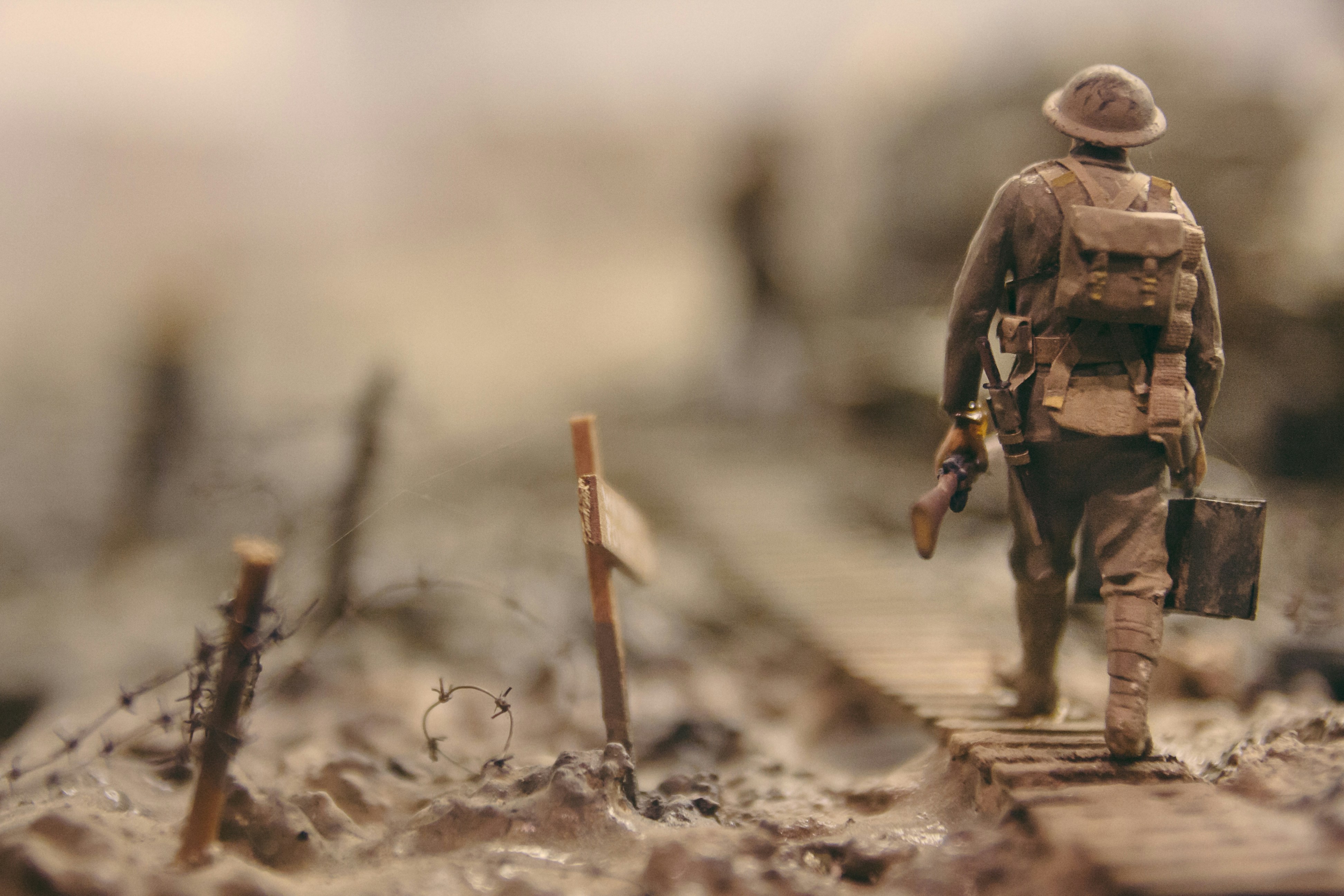
Knowing the enemy bunker lay as close as fifty yards away, soldiers learned to lie low in the trench. Leaving their bunker or peeking over the top could well be their last move. Barbed wire stretched across the tops of bunkers and through the land between-no man’s land. Snipers found vantage points from which they could shoot at soldiers daring to move out of their hole. Advancement was almost impossible.
Bunkers grew in sophistication, but most of their conditions were detestable. Some soldiers drowned in the mud. Some died of disease. Some lost feet due to trench foot. Many died from bullet shells, or poison gas. All suffered from trying to figure out what to do with sewage, dead bodies, flies, and rats.
Still, if you were in World War I, hunkering down in a bunker, trench, or foxhole might give you the best chance of survival. You could lob grenades and stick your gun over the top while keeping your head low. The problem is that if someone with a better view wasn’t giving you an idea of what was going on, you couldn’t leave your bunker until the other side surrendered or died. Even then, you may have felt safer staying right where you were.
With each side holed up, refusing to talk and engaging only through violence, the bunkers of war were void of peacemaking. The bunkers of life are no different.